The Homeschool Socialization Myth (And What Really Happens)
Addressing the biggest homeschool concern: socialization. Learn how homeschooled kids build real social skills through co-ops, sports, and community.
Disclosure: This post contains affiliate links. If you purchase through my links, I may earn a small commission at no extra cost to you. I only recommend products I genuinely love and believe in. Thank you for supporting Eventful Eve! 🤍
If you've told anyone — literally anyone — that you homeschool or are thinking about it, you've gotten The Question. You know the one. Said with a slight tilt of the head, maybe a furrowed brow, always with a tone that suggests they've identified a fatal flaw in your plan: "But what about socialization?"
I've heard it from family members, cashiers, strangers at the park, my dentist, and once from a woman in the Target checkout line who overheard me mention homeschool to my daughter. After a few years of this, I've developed a calm, thoughtful response. But I'll be honest — the first time someone asked me, I panicked. Was I ruining my kids? Was I sentencing them to a life of social awkwardness? Was the entire homeschool community just a collection of weird, isolated families in denial?
No. Not even close. Let me explain why.
The Assumption Behind the Question
When people ask about socialization, what they're really asking is: "How will your children learn to interact with other humans if they're not in a classroom with 25 same-age peers for seven hours a day?"
This question rests on a very specific assumption — that the primary (or only) way children develop social skills is through the traditional school environment. And when you actually think about that assumption, it starts to fall apart pretty quickly.
Think about your own social life as an adult. How many of your daily interactions are with people who are exactly your age, doing exactly the same tasks, in a room you can't leave? Probably none. Adult socialization looks like interacting with people of various ages, backgrounds, and interests in natural, everyday settings — at work, in your neighborhood, at church, at the store, with friends.
That's actually much closer to what homeschool socialization looks like than what traditional school provides.
What School Socialization Actually Is
I'm not here to bash traditional school. Many families thrive in it. But let's be honest about what "school socialization" actually entails:
- Sitting quietly in rows for most of the day
- Having social interaction primarily during a 20-minute lunch and a 15-minute recess
- Being grouped exclusively with same-age peers
- Navigating social hierarchies, cliques, and peer pressure
- Learning to ask permission to use the bathroom
- Limited opportunities for meaningful conversation during class time
- Exposure to bullying, gossip, and social comparison
Some of this builds resilience, sure. But a lot of it isn't "socialization" in any meaningful sense. It's proximity. Being near other children is not the same as learning to communicate, empathize, resolve conflict, collaborate, and build genuine relationships.
What Homeschool Socialization Actually Looks Like
In our experience — and in the experience of nearly every homeschool family I know — homeschooled kids have rich, varied, and genuinely healthy social lives. Here's what it actually looks like:
Co-ops and Learning Communities
Homeschool co-ops meet weekly (sometimes more) and bring families together for group classes, projects, and social time. Our co-op has been one of the best parts of homeschooling. The kids take art classes, do science labs, put on plays, and have gym time together. But what I love most is the mixed-age dynamic. My older child naturally mentors younger kids. My younger child looks up to the older ones. They learn to interact across age groups, which is a far more realistic model of how the real world works.
Sports and Activities
Homeschooled kids play sports — a lot of them, actually. Community soccer leagues, swim teams, gymnastics, martial arts, dance, rock climbing — these are all available to homeschool families and provide regular, structured social interaction. Many areas also have homeschool-specific sports leagues and PE classes.
Beyond sports, there are:
- 4-H clubs
- Scouting (Boy Scouts, Girl Scouts, Trail Life, etc.)
- Music lessons and ensembles
- Theater groups and community theater
- Art classes
- Volunteer organizations
Our kids are involved in enough activities that the question isn't "are they socialized?" — it's "how do we protect some quiet time at home?"
Community Involvement
One of the things I've noticed about homeschooled kids is that they're often unusually comfortable talking to adults. When you interact regularly with librarians, shop owners, park rangers, family friends, and co-op parents — not just same-age peers — you develop a different kind of social confidence. You learn to hold a conversation with anyone.
Homeschooled kids also have more time for genuine community involvement:
- Volunteering at food banks, animal shelters, or nursing homes
- Helping neighbors
- Participating in community events
- Working alongside adults in real-world settings
These aren't just "extracurriculars." They're deeply formative social experiences that many traditionally schooled kids don't get until they're much older.
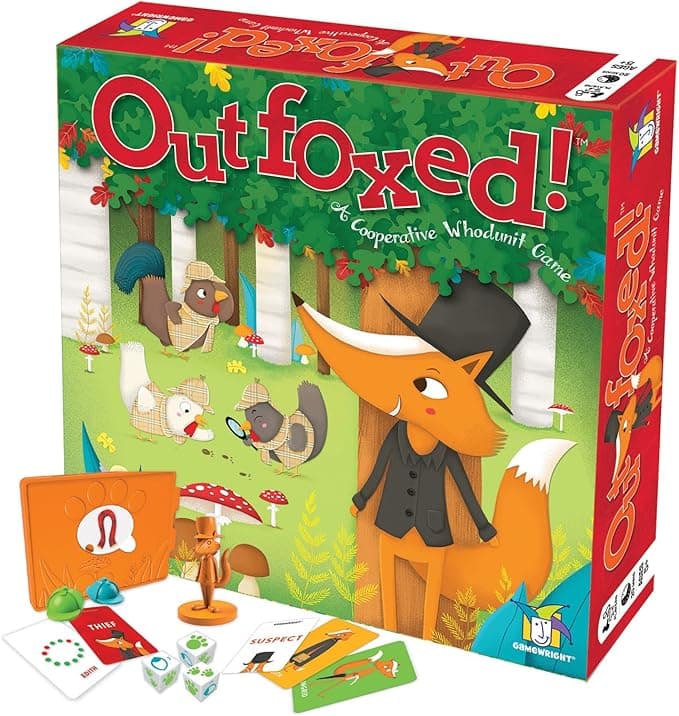
Outfoxed! Cooperative Whodunit Board Game for Kids
Cooperative games are perfect for co-op days and mixed-age groups because kids practice teamwork, communication, and problem-solving without the meltdowns that competitive games can bring. Outfoxed is a family favorite where everyone works together to solve a mystery before the fox escapes.
Neighborhood and Family Friendships
Without the exhaustion of a full school day, homeschooled kids often have more energy and time for real friendships. Our kids play with neighborhood friends in the afternoons. They have time for long playdates that aren't squeezed into an already packed after-school schedule. They spend meaningful time with grandparents, cousins, and family friends.
The quality of these interactions is different too. Instead of the rushed, often superficial social time that happens in a 20-minute recess, homeschooled kids have the luxury of extended, unhurried time with friends — building forts, creating elaborate games, working through disagreements, and deepening relationships.
What the Research Actually Says
If you want to get into the data, the research on homeschool socialization is encouraging:
- Studies consistently show that homeschooled children score at or above average on measures of social, emotional, and psychological development
- Homeschooled kids tend to have fewer behavioral problems than their peers in conventional schools
- Research from the National Home Education Research Institute shows that homeschooled adults are more civically engaged — they vote at higher rates, participate in community service more frequently, and are more likely to be involved in their communities
- Multiple studies indicate that homeschooled children have higher self-esteem and lower levels of peer dependency than conventionally schooled children
None of this means homeschooling automatically produces socially thriving kids. It means the method of education isn't the determining factor. What matters is whether kids have regular opportunities for meaningful social interaction — and homeschooled kids absolutely can and do.
Potential Pitfalls (And How to Avoid Them)
I want to be balanced here. Homeschool socialization doesn't happen automatically. It takes intentional effort from parents. Here are some pitfalls and how to avoid them:
Isolation is real if you let it happen. If you homeschool and never leave the house, never join a group, never arrange playdates — yes, your child will be socially isolated. The solution is simple: get out of the house regularly and connect with community.
Some families need to try multiple groups to find the right fit. Not every co-op or activity group will feel right. That's okay. Keep looking until you find your people.
Introverted kids still need social opportunities. Even if your child is naturally quiet or prefers smaller groups, they still need practice navigating social situations. Just honor their style — a one-on-one playdate might be more their speed than a big group event.
Don't compare to the school model. Your child doesn't need 30 friends and a packed social calendar. A few good friendships, regular interaction with people of various ages, and opportunities to practice communication and conflict resolution — that's healthy socialization.
How to Answer The Question
When someone asks you about socialization, you don't owe them a research paper. Here are some responses I've used:
The simple one: "They have co-op on Tuesdays, soccer on Thursdays, and play with friends most afternoons. They're doing great."
The slightly deeper one: "We're actually really intentional about it. They interact with people of all ages — not just same-age peers — and I think that's given them really strong social skills."
The redirect: "What specifically about socialization concerns you?" (This usually reveals that the person hasn't actually thought about it deeply — they're just repeating a common worry.)
The honest one: "It was my biggest fear too. But after doing this for a while, I've realized my kids are more social now than they were in school — and the quality of their friendships is so much richer."
And if you're still in the early stages and don't have a confident answer yet, it's perfectly okay to say: "We're still figuring out our rhythm, but we're being really intentional about building community." You don't owe anyone a perfect answer. You just owe your kids a thoughtful approach — and the fact that you're even thinking about it means you're already on the right track.
Building Your Social Network: Practical Steps
If you're new to homeschooling and the socialization question is weighing on you, here's a concrete action plan:
Month one: Find and join a local homeschool Facebook group. Introduce yourself. Ask about co-ops and park days in your area.
Month two: Attend at least one group event — a park day, a co-op open house, a field trip. You don't have to commit to anything. Just show up and meet people.
Month three: Sign up for one regular activity — a co-op, a sport, a class, a weekly park day. Consistency is what builds friendships, for kids and parents alike.
Ongoing: Say yes to invitations. Initiate playdates. Be the one who suggests getting together. Building a social network outside of school takes a little more effort than being automatically assigned a classroom, but the friendships that form are often deeper and more lasting because they're chosen, not defaulted.
The Real Question
The real question isn't "Will my homeschooled child be socialized?" The real question is "Will my child have regular, meaningful opportunities to interact with other people, practice social skills, and build genuine relationships?"
And the answer to that, for any engaged homeschool family, is absolutely yes. Not in spite of being homeschooled. Often because of it.