Homeschool Room Setup Ideas for Any Space
Practical homeschool room setup ideas for any space — small apartments to dedicated rooms. Organization tips, furniture picks, and display ideas.
Disclosure: This post contains affiliate links. If you purchase through my links, I may earn a small commission at no extra cost to you. I only recommend products I genuinely love and believe in. Thank you for supporting Eventful Eve! 🤍
I need to confess something: we homeschooled at our kitchen table for the first full year. No dedicated room. No matching bins. No chalkboard wall with perfectly lettered Bible verses. Just the kitchen table, a bookshelf in the living room, and a plastic bin of art supplies that lived on top of the fridge. And you know what? It worked. We learned. We grew. It was fine.
But I also have to confess that when we eventually set up a dedicated learning space, everything got easier. Not because the room was fancy — it wasn't — but because having a space that was intentionally organized for learning meant less setup time, less chaos, and a clearer mental signal for everyone that "this is where we work." If you're thinking about creating a homeschool space, whether it's an entire room or a corner of your dining area, this post is full of practical ideas that work in real homes with real budgets.
You Don't Need a Whole Room
Let me get this out of the way first, because I know it's the worry for a lot of families: you do not need a dedicated homeschool room to homeschool effectively. Plenty of wonderful homeschool families use:
- The kitchen or dining room table
- A corner of the living room
- A section of a bedroom
- A hallway alcove with a small desk
- The couch (yes, really — read-alouds on the couch are peak homeschool life)
- The backyard, the porch, the car, the library
What matters isn't the size of the space. What matters is having your materials organized and accessible so you're not starting each day with a scavenger hunt for the math book.
The Essentials: What Every Space Needs
Regardless of whether you have a whole room or a shared corner, these are the things that make a homeschool space functional:
1. A flat work surface. A table, a desk, or even a large lap desk. It doesn't need to be fancy. It needs to be big enough for an open book and a notebook side by side.
2. A place for books. A bookshelf, a basket, a small rolling cart — whatever keeps your current books accessible and organized. I separate ours into "currently reading" and "reference/resource" sections.
3. Supply storage. Art supplies, math manipulatives, scissors, glue, pencils — these need a home. The specific container doesn't matter as much as the system. When everything has a designated spot, cleanup takes five minutes instead of twenty.
4. A writing/display surface. A whiteboard, a chalkboard, a corkboard, or even a section of wall with painter's tape. You need somewhere to work through problems, display the week's schedule, and hang up artwork and maps.
5. Good lighting. Natural light is ideal. If your space doesn't have great natural light, invest in a good desk lamp. Straining to see worksheets is a fast track to frustration.
Small Space Solutions
If you're working with limited square footage, here are some strategies that maximize every inch:
Go vertical. Wall-mounted shelves, hanging organizers, pegboards, and over-the-door storage free up floor and table space. We hung a pegboard above our desk area and it holds scissors, rulers, tape, and small baskets of supplies.
Use furniture that multitasks. An ottoman with storage inside can hold manipulatives and games. A fold-down wall desk creates workspace when you need it and disappears when you don't. A rolling cart can serve as your entire supply station and tuck into a closet at the end of the day.
The rolling cart method. This deserves its own mention because it's brilliant for small spaces. Get a 3-tier rolling cart and organize it by tier: top tier for daily supplies (pencils, erasers, markers), middle tier for the current week's workbooks and materials, bottom tier for art supplies or manipulatives. When school is done, roll it to a corner or a closet. Your dining room is your dining room again.
Rotate rather than display everything. You don't need every book, game, and resource out at once. Keep the current week's or month's materials accessible and store the rest. This reduces visual clutter and makes your space feel calmer.
Use the back of doors. Over-the-door organizers with clear pockets are perfect for flash cards, small supplies, and reference sheets.
Setting Up a Dedicated Room
If you're fortunate enough to have a room to dedicate to homeschooling, here's how I'd set it up based on what's worked for us:
Zones work better than rows. Instead of setting up your room like a traditional classroom with desks facing forward, think in zones:
- Focus zone — This is where concentrated individual work happens (math, writing, reading). A desk or table with good lighting and minimal distractions.
- Together zone — A comfortable spot for read-alouds, morning basket, and discussions. A couch, a rug with floor cushions, or a cozy reading nook.
- Creative zone — Art supplies, building materials, hands-on projects. Ideally somewhere mess-friendly. We put a washable tablecloth down and call it done.
- Display zone — A wall or section for maps, timelines, artwork, the weekly schedule, and student work you want to celebrate.
- Library zone — Your bookshelf area. Organized however makes sense for your family — by subject, by child, by "currently reading" vs. "up next."
Keep the teacher's area separate from the kids' area. Your planning materials, answer keys, and reference guides should have their own space — not mixed in with the kids' supplies. A small desk or even a dedicated shelf for your stuff keeps things organized and keeps little hands out of the answer key.
Furniture That Pulls Its Weight
You don't need to buy specialty "homeschool furniture." Regular home furniture works perfectly. Here are my recommendations:
A solid table is more versatile than individual desks, especially if you have multiple kids. Everyone can work side by side, you can spread out big projects, and it doubles as craft space. We use a large farmhouse-style table and it's the heart of our homeschool.
Adjustable chairs are worth the investment if your kids will be sitting for any length of time. Growing bodies need proper support. A simple ergonomic chair that adjusts for height saves a lot of squirming and back complaints.
Bookshelves — the more the better, honestly. We have three in our homeschool space and they're all full. If you're short on space, one good bookshelf that's well-organized will do. Just make sure the shelves your kids need to access are at their height.
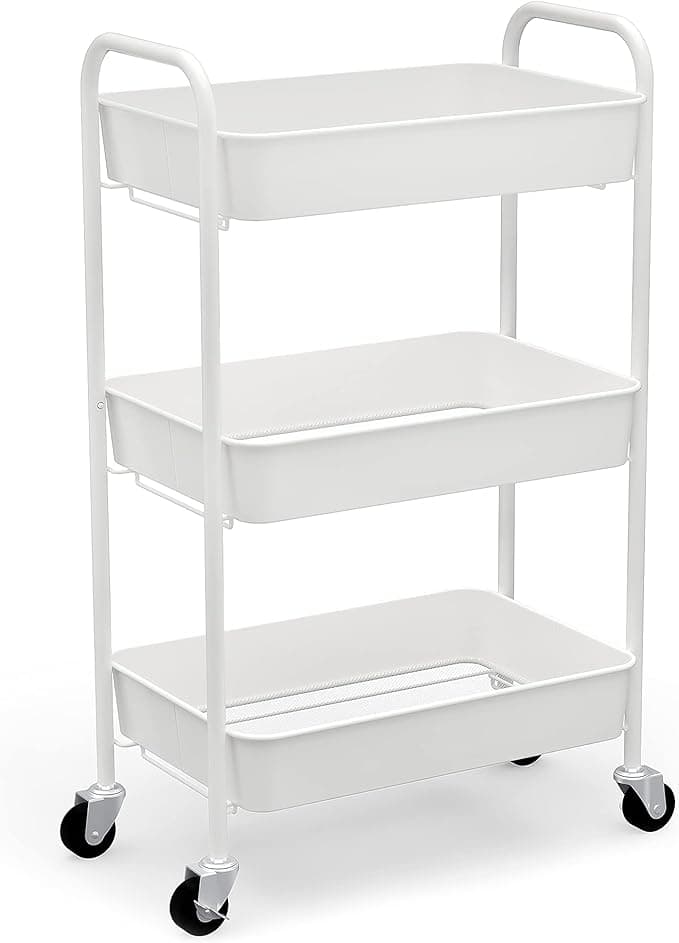
CAXXA 3-Tier Rolling Metal Storage Organizer Cart with Caster Wheels
This cart is the MVP of small-space homeschooling. We use one as our mobile supply station, with the top shelf for daily supplies, the middle for current workbooks, and the bottom for art materials. When school is done, it rolls into the closet. The caster wheels lock so it doesn't roll away during use. I liked ours so much I bought a second one for our art supplies.
Organization Systems That Last
The best organization system is one you'll actually maintain. Here are some that have stuck for us:
Weekly prep basket. Every Sunday evening, I gather the books and materials we'll need for the coming week and put them in one basket or bin. During the week, everything we need is in one place. No morning scrambling.
Color-coding by child. Each kid has a color — their folders, notebooks, bins, and even pencil cups are their color. This eliminates about 90% of "that's mine" arguments and makes it easy to sort things during cleanup.
A family calendar wall. We have a large wall calendar where we write co-op days, field trips, library days, deadlines, and activities. The kids can see the week at a glance and it builds their sense of time management.
An "in progress" shelf. Ongoing projects, half-finished books, and works-in-progress live on one designated shelf. This keeps them safe from getting thrown away or lost but also visible enough that they actually get finished.
End-of-day reset. We spend five minutes at the end of each school day putting supplies back, shelving books, and clearing the table. This tiny habit makes a massive difference. Starting the next day in a clean space sets the tone for everything.
Display Ideas That Inspire
Hanging up student work, maps, timelines, and artwork does more than decorate — it creates a sense of pride, ownership, and visual learning reinforcement.
- Timeline wall — A long strip of paper or ribbon running along a wall where you add figures, dates, and events as you study them. By the end of the year, you have a visual record of everything you've covered.
- Art gallery — String a wire or ribbon along a wall and use clips to hang current artwork. Rotate pieces regularly. Kids love seeing their work displayed.
- Map wall — Hang a large world map and a country map. Mark locations as you study them. This makes geography a living, daily reference.
- Quote or poetry board — A small chalkboard or framed area where you write the current week's poem, memory verse, or inspiring quote.
- Nature display shelf — A small shelf or tray where kids place their nature finds — interesting rocks, feathers, pinecones, pressed flowers. This connects your nature study to your indoor space.
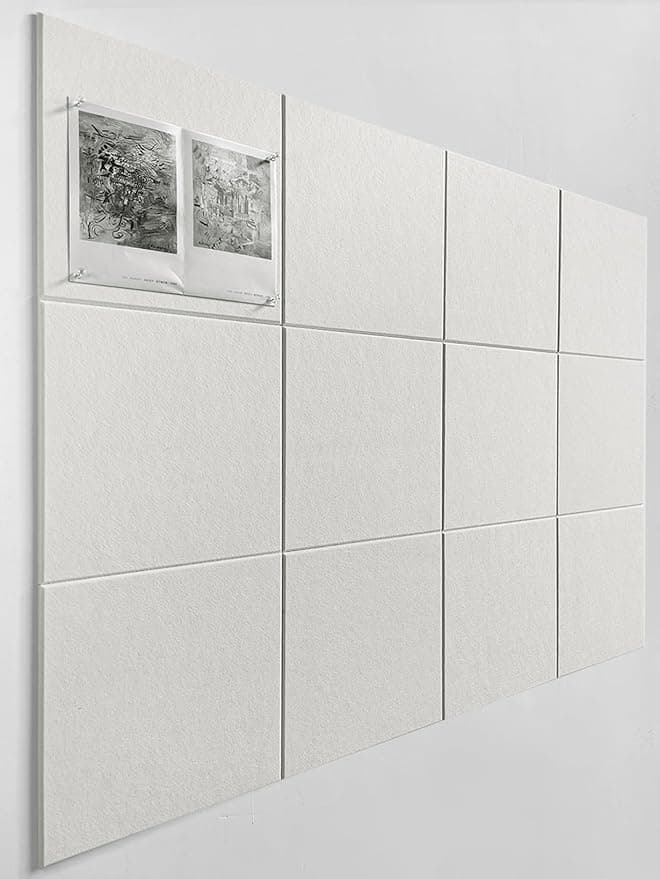
Felt Wall Tiles, 12-Pack Bulletin Board Tiles for Home and Classroom
These adhesive felt tiles are perfect for creating a display wall without damaging your walls. We arranged them in a grid and use them to pin up artwork, maps, timelines, and reference charts. They're easy to rearrange if you change your mind about the layout, and they hold pushpins well. Much more flexible than a single large corkboard and they look nicer too.
Making It Feel Like Home
Here's my last thought on homeschool spaces: it should feel like home, not school. You're not trying to recreate a classroom. You're creating a space where your family learns, grows, and connects. That might mean fairy lights over the reading nook, a plant on the windowsill, the dog's bed in the corner, or music playing softly during art time.
The best homeschool spaces I've seen — including ours — look nothing like classrooms. They look like homes where learning happens to be a natural, comfortable, everyday part of life. Because that's exactly what they are.
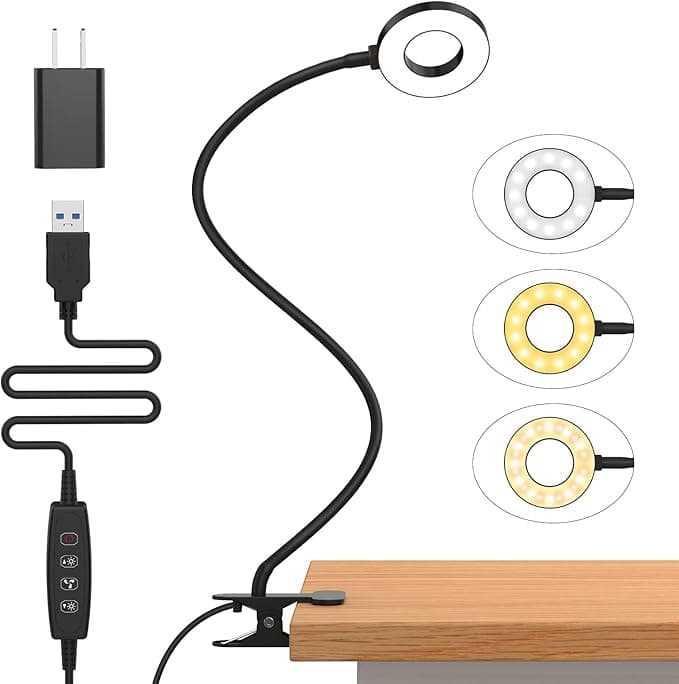
iZELL LED Clip-On Desk Lamp, 3 Color Modes and 10 Brightness Levels
Good lighting makes such a difference, especially if your learning space doesn't get a lot of natural light. This clip-on lamp attaches to a desk, shelf, or table edge and has three color modes with ten brightness levels. The flexible arm lets you direct light exactly where you need it. We clip one on each side of our table during the darker winter months.