The Best Non-Toxic Cookware for a Healthier Kitchen (That I Actually Use)
I used to think that as long as my food was healthy, I was doing everything right. Organic veggies, quality proteins, no junk -- I felt pretty good about my kitchen. Then I started actually looking into what my pans were made of, and honestly? I had to sit down for a minute.
Most conventional non-stick cookware is coated with PTFE (the chemical that makes up Teflon), and while the brands will tell you it's safe at normal cooking temps, the coating chips over time, releases fumes when overheated, and I just... stopped feeling okay about it. Once I went down the rabbit hole of PFAS chemicals (the "forever chemicals" that never break down in our bodies or the environment), I decided it was time to replace basically everything in my kitchen.
The good news? Non-toxic cookware has come SO far. I've been testing and swapping pieces over the past couple of years, and I'm going to share everything I've learned so you can skip the trial and error.
Why Non-Toxic Cookware Actually Matters
Here's the thing -- we eat multiple meals a day, every single day, cooked in these pans. The exposure adds up. The chemicals I'm most concerned about are:
PTFE/Teflon: The classic non-stick coating. Fine when intact and used at low temps, but scratches, chips, and releases fumes above 500 degrees Fahrenheit. Birds are actually fatally sensitive to Teflon fumes (it's called "Teflon toxicosis"), which tells you something.
PFAS (Per- and Polyfluoroalkyl Substances): A huge family of chemicals used in many non-stick coatings. They're called "forever chemicals" because they accumulate in our bodies and the environment and don't break down. Linked to hormone disruption, thyroid issues, and more.
Aluminum: Uncoated aluminum can leach into acidic foods like tomato sauce or citrus. Most aluminum cookware has a coating, but if that coating wears down, you've got a problem.
I'm not here to fear-monger -- I'm here to give you options that are genuinely better. And the good news is that safer cookware isn't harder to use; in a lot of ways, it's actually more satisfying.
The Best Non-Toxic Materials to Look For
Ceramic-Coated Cookware
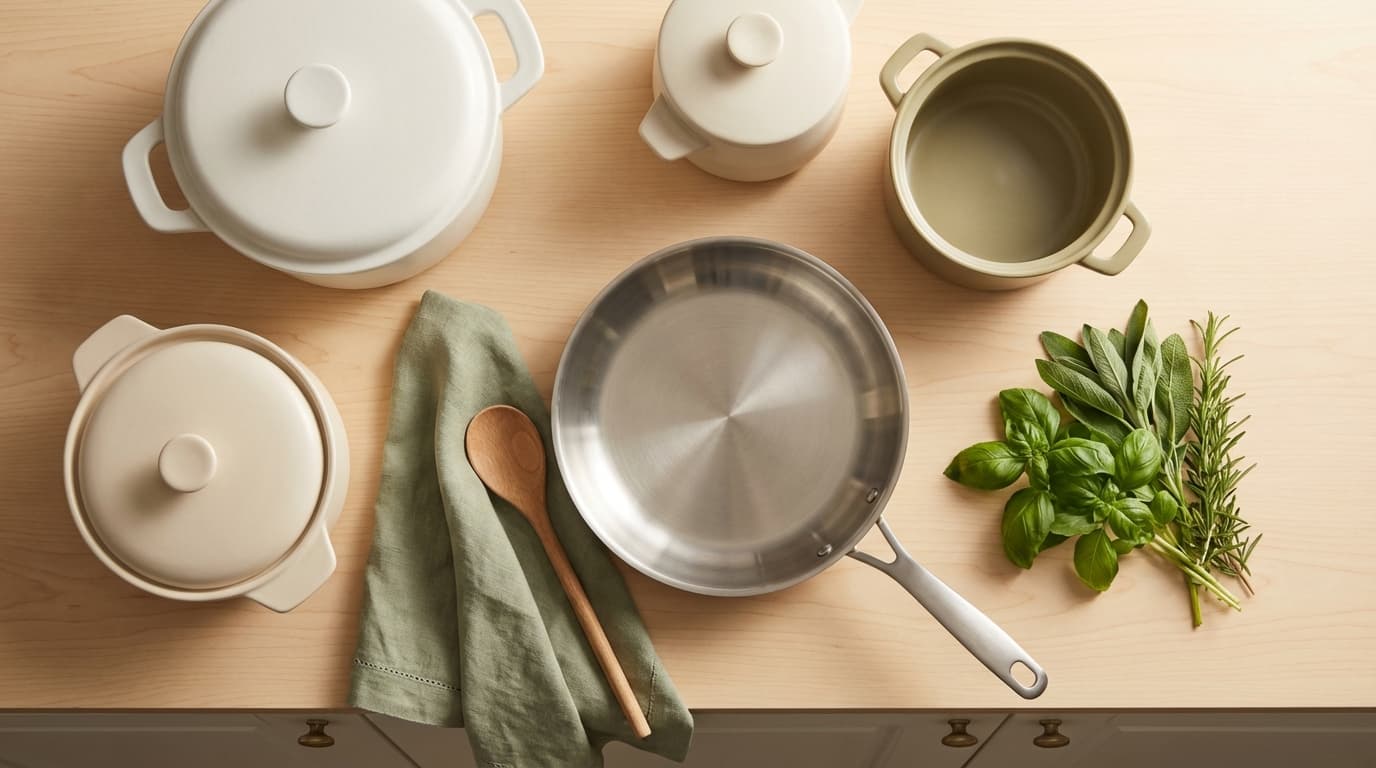
This is probably the easiest swap for people used to non-stick. Ceramic coatings are free of PTFE and PFAS, and they work beautifully for eggs, fish, and anything delicate. The key is to treat them well -- no metal utensils, medium-low heat, hand wash only.
Stainless Steel
My workhorse. Once you learn to cook with stainless (the secret: let the pan get hot before adding food, then it won't stick), you'll wonder why you ever used anything else. It's durable, oven-safe, and completely inert. Nothing leaches, nothing off-gasses, nothing. I sear proteins, make pan sauces, and cook everything in my stainless set.
Cast Iron
Nothing beats cast iron for searing and baking. Yes, it's heavy. Yes, it requires a bit of care. But a well-seasoned cast iron pan is naturally non-stick, will last literally forever, and adds a small amount of dietary iron to your food (which is actually a benefit for many women). Lodge is the classic, affordable go-to.
Enameled Cast Iron
All the benefits of cast iron but with an enamel coating that makes it non-reactive and easier to clean. Perfect for braises, soups, and slow-cooked dishes. Le Creuset and Staub are the dream, but there are more affordable options worth considering.
Carbon Steel
Think cast iron but lighter and more responsive to heat changes. Very popular in professional kitchens. It requires seasoning like cast iron but heats faster and is easier to maneuver.
The Pieces I Actually Recommend (and Use)
I want to be real with you: you don't need to replace everything at once. Start with the pieces you use most -- for most people, that's a skillet and a saucepan. Swap as your budget allows. Here are the specific products I genuinely love and use in my own kitchen:
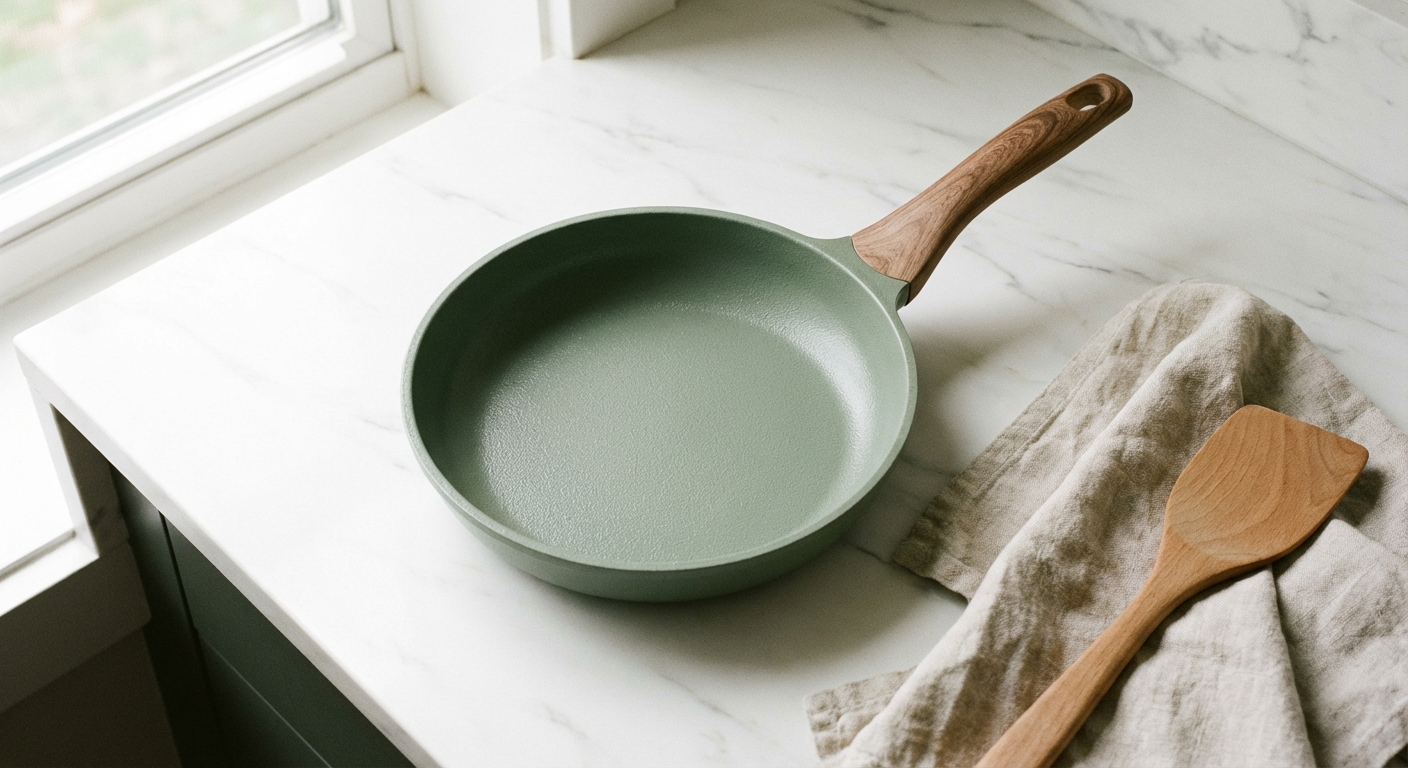
GreenPan Valencia Pro 10-Inch Ceramic Non-Stick Skillet
PFAS-free Thermolon ceramic coating, hard-anodized exterior, oven-safe up to 600 degrees, and induction compatible. This is my go-to for eggs in the morning and delicate fish. The medium size is perfect for everyday use.
Shop on Amazon →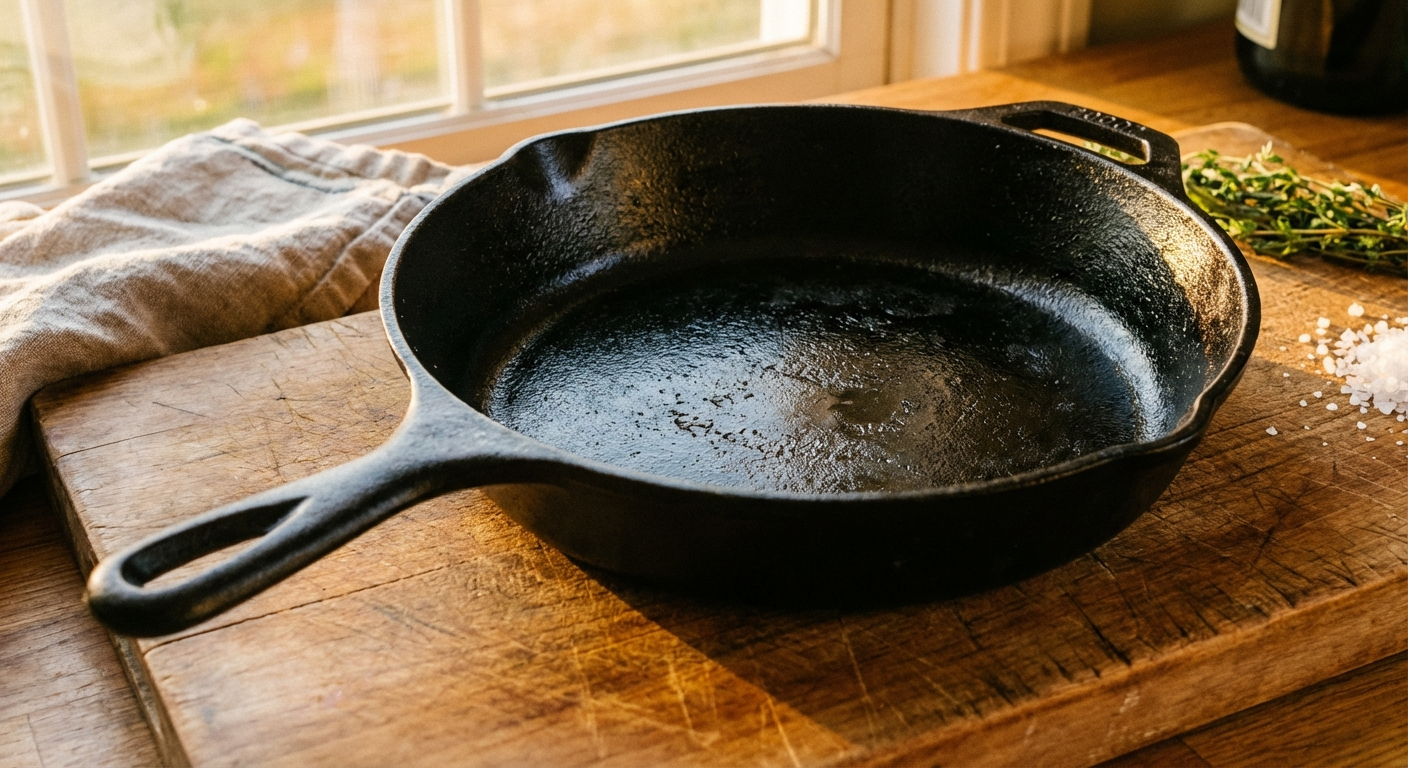
Lodge 10.25-Inch Pre-Seasoned Cast Iron Skillet
This is the most reliable, affordable non-toxic pan you can own. Pre-seasoned and ready to use right out of the box. I use mine for searing chicken thighs, making cornbread, and getting the best caramelized vegetables. It will literally last your entire lifetime.
Shop on Amazon →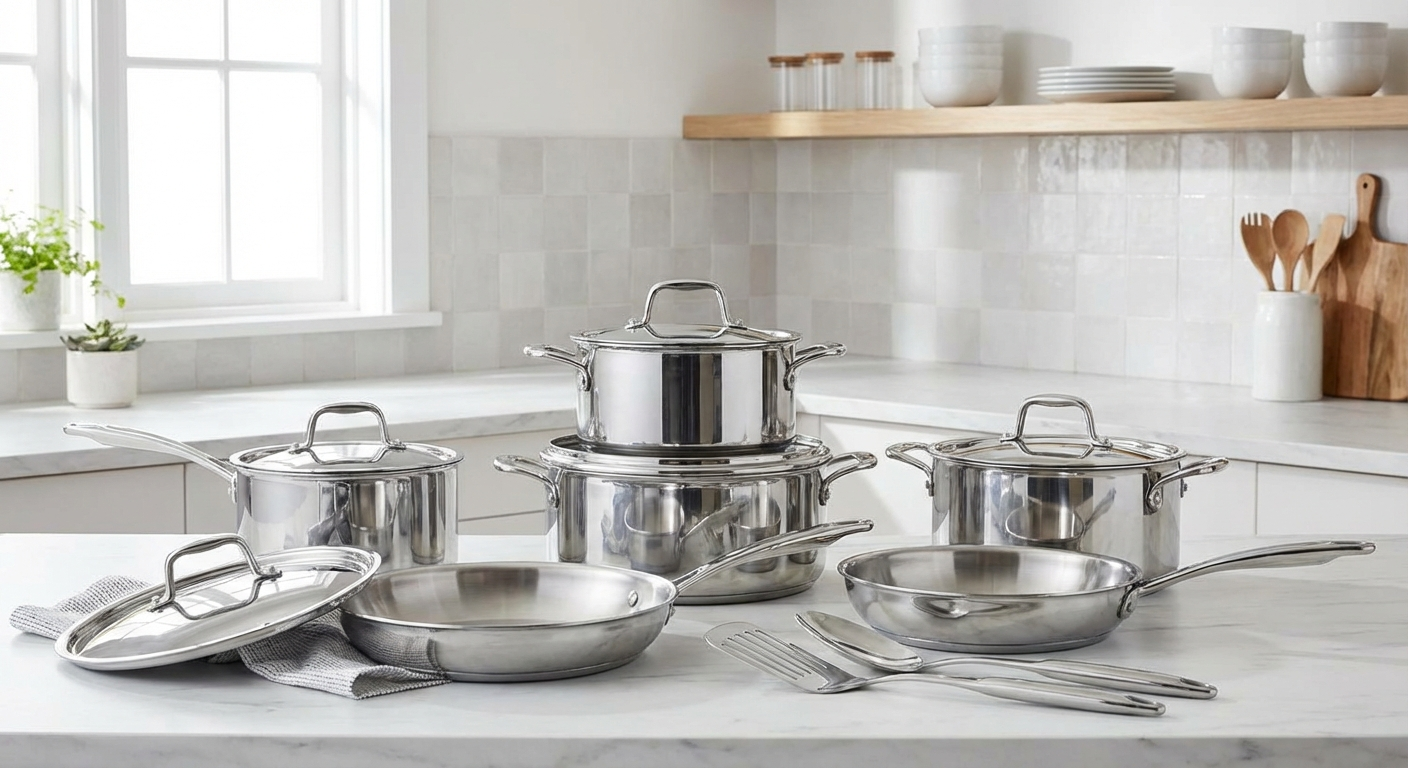
All-Clad D3 Stainless Steel 10-Piece Cookware Set
If you are ready to invest in a full stainless set that will last decades, All-Clad D3 is the gold standard. Tri-ply bonded construction means even heat distribution, and everything is dishwasher safe. Yes, the price point is high -- but I think of it as a one-time kitchen purchase. Worth every penny.
Shop on Amazon →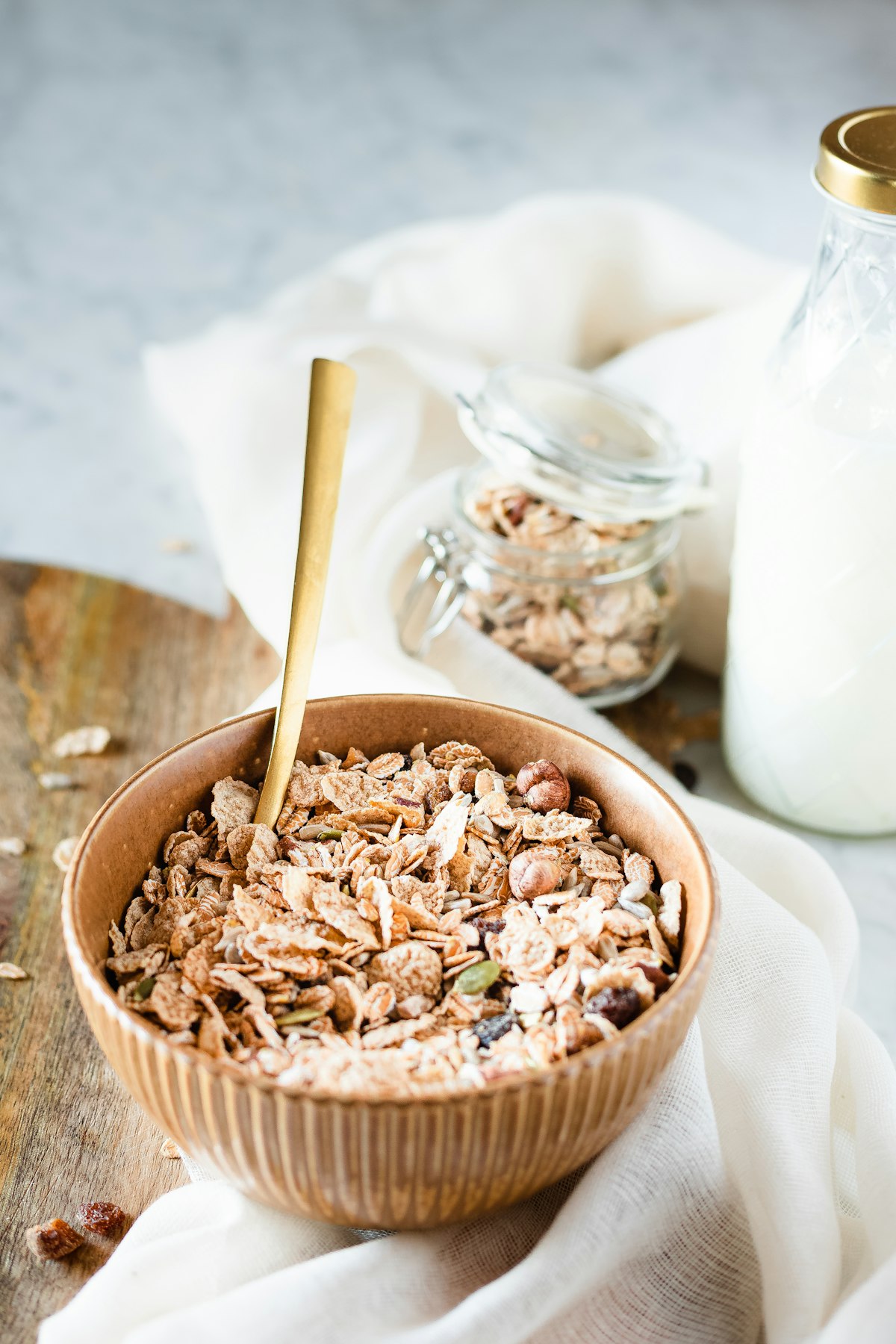
Tips for Cooking with Non-Toxic Pans
Switching to non-toxic cookware does come with a small learning curve, especially if you're used to the grab-and-go ease of traditional non-stick. Here's what actually helped me:
For ceramic non-stick:
- Use low to medium heat -- ceramic doesn't need high heat to cook effectively
- Let the pan preheat for 60 seconds before adding food or oil
- Never use cooking sprays (they leave a residue that degrades the coating over time)
- Use wooden, silicone, or nylon utensils only
- Hand wash with warm soapy water and a soft sponge
For stainless steel:
- This one has the steepest learning curve but it's actually simple once you get it
- Heat the pan first (medium), then add your fat, then add your food
- Do the "water bead test" -- drop a little water in the pan; if it beads up and rolls around (the Leidenfrost effect), it's ready
- Food will release naturally when it's ready -- don't force it
- Stainless is dishwasher safe, but hand washing keeps it looking nicer longer
For cast iron:
- Don't soak it in water or it will rust
- After washing, dry it completely on the stovetop over low heat
- Rub a thin layer of oil over the cooking surface after each use while it's still warm
- Never cook tomatoes or other highly acidic foods in unseasoned cast iron (fine once it's very well seasoned)
For enameled cast iron:
- No seasoning required
- Avoid thermal shock (going from very hot to very cold)
- The enamel can chip if you bang it around, so handle with care
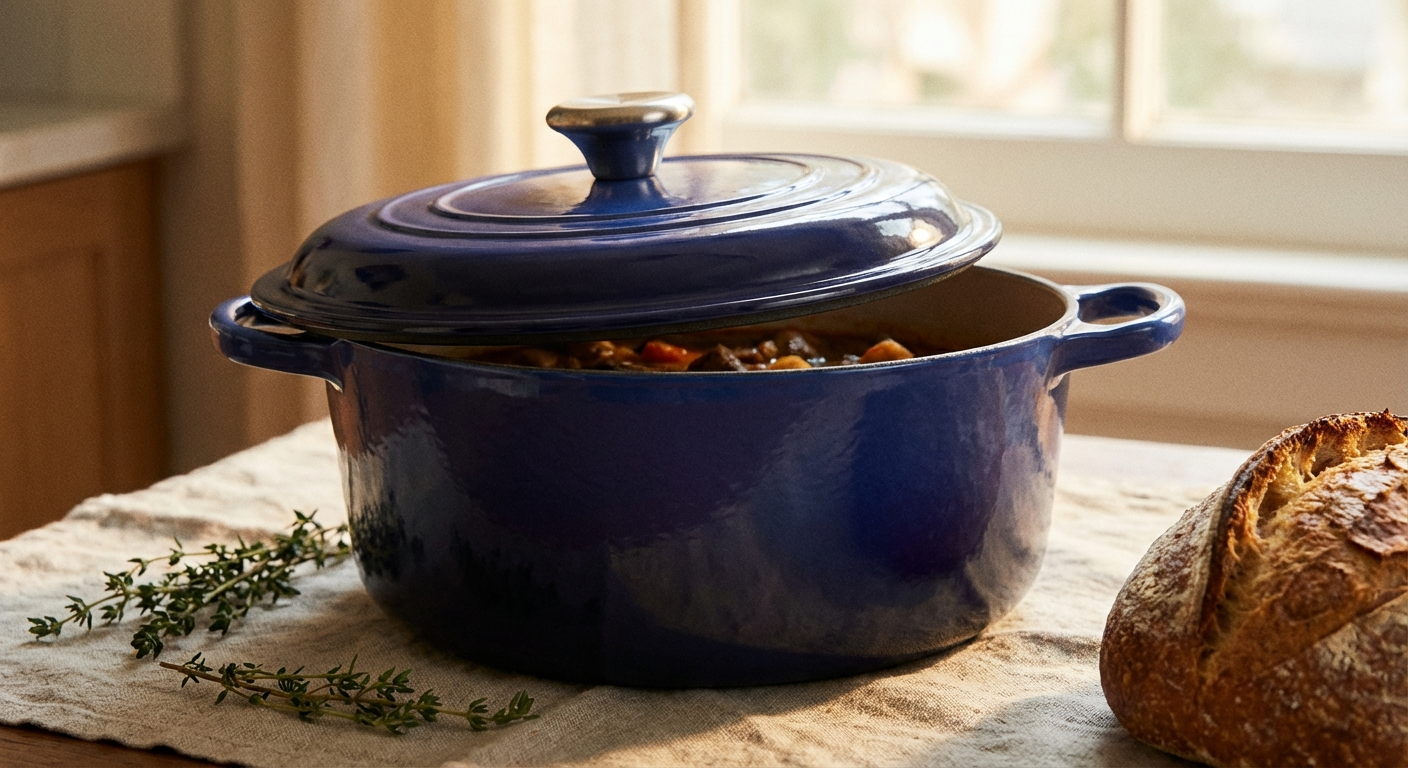
Le Creuset Signature Enameled Cast Iron 5.5 Qt Dutch Oven
The splurge I have zero regrets about. I make soups, stews, braises, and even bread in this Dutch oven. The enamel coating means no seasoning required and nothing leaches into your food. It goes from stovetop to oven to table beautifully. This is a true heirloom piece.
Shop on Amazon →Budget-Friendly Ways to Make the Switch
I hear you -- non-toxic cookware, especially the All-Clad and Le Creuset options, is not cheap. Here's how I'd approach the swap without breaking the bank:
Start with one piece. The skillet. You use it most, and a ceramic or cast iron skillet is one of the more affordable entry points. GreenPan has options under $40, and Lodge cast iron is around $30. That's it. Start there.
Shop the Amazon Warehouse deals. Seriously, I have found All-Clad and GreenPan at serious discounts in the "like new" or "very good" condition warehouse section. For stainless and cast iron especially, minor cosmetic wear means nothing.
Watch for sales. Black Friday and Prime Day often have significant discounts on cookware. I snagged a GreenPan set for nearly half off during Prime Day last year.
Don't buy a full set right away. Full sets sound like a deal, but you may end up with pieces you never use. I'd rather have three pieces I love and actually use than a cabinet full of mediocre stuff.
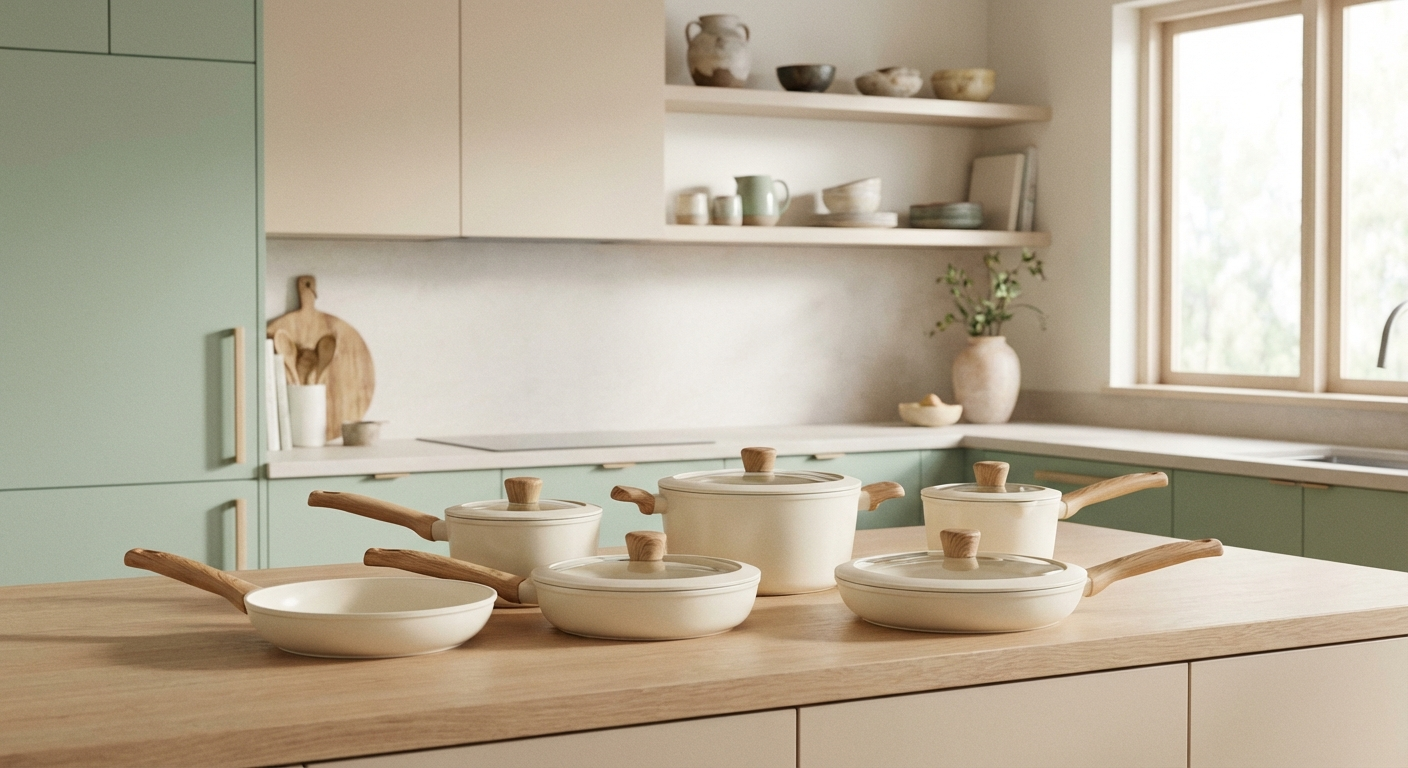
Caraway Non-Toxic Ceramic Cookware Set
If you want a complete non-toxic ceramic set that's also genuinely pretty to look at, Caraway is it. This 4-piece set includes a saucepan, saute pan, frying pan, and Dutch oven with lids -- everything you actually need. The color options are gorgeous and the ceramic coating is completely PFAS-free. Comes with magnetic pan racks and canvas lid storage too.
Shop on Amazon →
What I Actually Have in My Kitchen Right Now
I get asked this a lot, so here's my real lineup:
- Everyday eggs and delicate things: GreenPan ceramic skillet (10-inch)
- Searing and high-heat cooking: Lodge cast iron (10.25-inch)
- Sauces, pasta, boiling water: All-Clad stainless saucepan (3-quart)
- Stir fries, sautes, large meals: All-Clad stainless saute pan (4-quart)
- Soups, braises, stews: Le Creuset Dutch oven (5.5-quart)
That's genuinely it. Five pieces, and I can cook literally anything. I didn't need a 12-piece set. I needed the right 5.
My Honest Verdict
Making the switch to non-toxic cookware was one of the better health-forward decisions I've made for my kitchen. I feel better knowing I'm not unknowingly exposing myself to chemicals every single day, and honestly, cooking with stainless and cast iron has made me a better cook. You develop more intuition, more technique -- it's kind of satisfying.
If you're just starting out, grab the Lodge cast iron skillet and a GreenPan ceramic pan. Those two pieces will cover 90% of what you cook every day. Then add from there as you can.
Your kitchen should support your health, not work against it. And the good news is it doesn't have to cost a fortune to make it happen.
Disclosure: This post contains affiliate links. If you purchase through my links, I may earn a small commission at no extra cost to you. I only recommend products I genuinely use and love. Thank you for supporting Eventful Eve!