Best Supplements for Perimenopause That Actually Help
The perimenopause supplements that actually made a difference for me: magnesium, adaptogens, omegas, and the ones I stopped wasting money on.
Disclosure: This post contains affiliate links. If you purchase through my links, I may earn a small commission at no extra cost to you. I only recommend products I genuinely love and believe in. Thank you for supporting Eventful Eve! 🤍
I have spent an embarrassing amount of money on supplements over the past two years. When my perimenopause symptoms started rolling in (the unpredictable periods, the 3 AM wakeups, the mood swings that blindsided me during ordinary Tuesday afternoons), my first instinct was to throw every supplement I could find at the problem. I bought seven different magnesium products, three kinds of adaptogens, a drawer full of herbal blends with pretty labels, and enough collagen powder to feed a small family. Most of it did nothing. Some of it made things worse. But a handful of supplements genuinely moved the needle, and those are the ones I still take every single day.
This is the honest list. Not the "30 supplements you need" marketing sprawl, not the expensive subscription bundles pushed on Instagram, just the specific supplements that I keep repurchasing because they actually help. I'll tell you what each one does, when I take it, what to look for on the label, and which ones I tried and quietly stopped buying.
Why Supplements Matter More in Perimenopause
Your body in perimenopause is working harder to do things that used to happen automatically. Estrogen is fluctuating wildly instead of cycling predictably. Progesterone is dropping off. Your cells are becoming less responsive to insulin. Your sleep architecture is fragmenting. Your mood regulation is more reactive than it used to be. All of these shifts create increased demand for specific nutrients, and many of us walk into perimenopause already running low on the exact nutrients we now need more of.
Stress depletes magnesium. Chronic sleep loss increases inflammation, which further depletes antioxidants. Estrogen changes affect calcium absorption, bone turnover, and how efficiently your body handles iron. Mood shifts pull on your neurotransmitter precursors. This is the biological context in which "just eat a balanced diet" stops being enough, even for women who genuinely do eat a balanced diet.
The goal of supplementing during perimenopause isn't to override biology. It's to give your body the specific raw materials it needs to weather the transition more comfortably. I wrote a full guide to natural hormone balance tips that covers the lifestyle pieces. This post is the complementary piece on what I actually take.
Magnesium Glycinate, The One I Won't Skip
If I could only keep one supplement, it would be magnesium glycinate. Full stop. This is the single highest-impact supplement I have added in perimenopause, and I cannot overstate how much of a difference it has made.
Magnesium is involved in over 300 enzymatic processes in the body, and nearly all of them become more important during perimenopause: muscle relaxation, nervous system regulation, blood sugar management, sleep quality, mood stability, and cortisol response. Most women are already low in magnesium before perimenopause hits, and the combination of chronic stress and hormonal shifts depletes it further.
I take magnesium glycinate specifically (not oxide, not citrate) because it's the best-absorbed form and the gentlest on the gut. Glycinate is especially good for sleep and anxiety because glycine itself is a calming amino acid. I take 400mg about an hour before bed. Within the first week of consistent use, I noticed I was falling asleep faster and staying asleep through the night. The 3 AM wakeups didn't disappear entirely, but they became rare instead of routine.
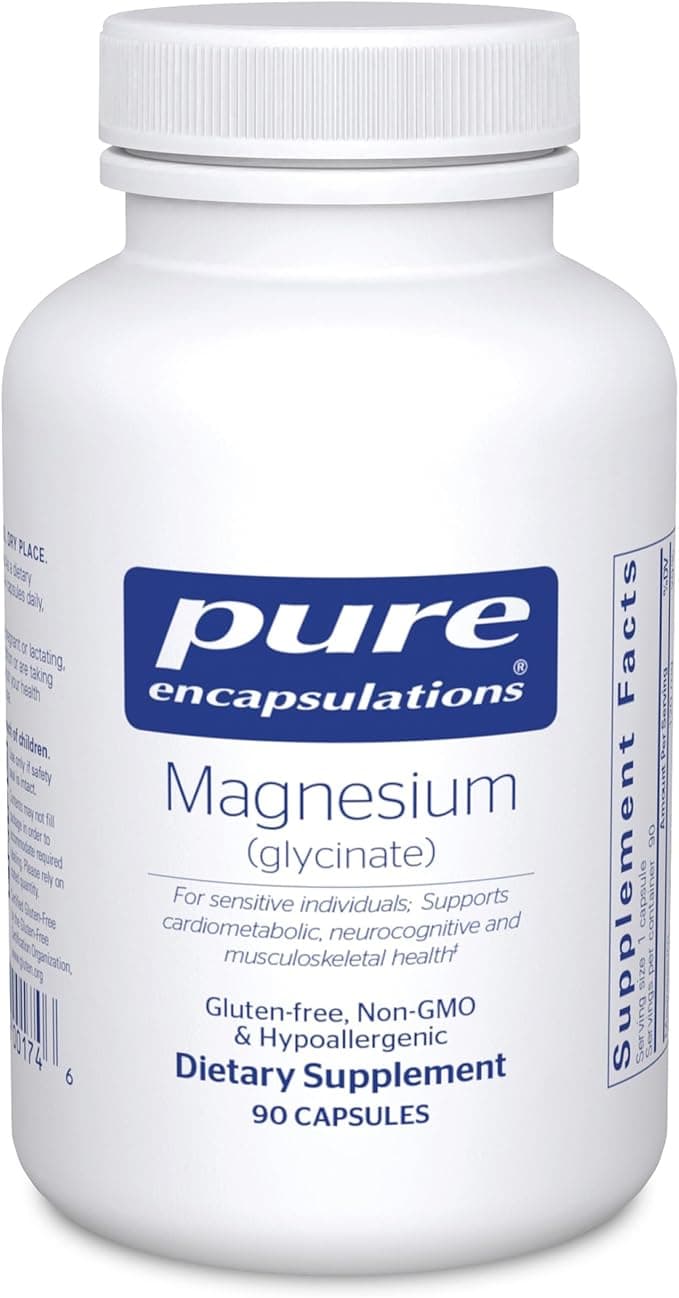
Pure Encapsulations Magnesium Glycinate — 120mg Capsules
The cleanest magnesium glycinate I've found. No fillers, no unnecessary additives, and the glycinate form is gentle enough to take every night without any gut side effects. This is my non-negotiable evening supplement.
For more on why this one matters so much, I covered it in depth in benefits of magnesium for women. If you take nothing else on this list, take this.
Ashwagandha for Cortisol and the 3 AM Wakeups
The second supplement that made a meaningful difference for me was ashwagandha. This is an adaptogenic herb that helps regulate cortisol, which is one of the trickiest hormones to manage during perimenopause because it tends to stay elevated when it should be dropping (especially in the late evening and early morning hours).
I covered the full mechanism in my ashwagandha benefits for women post, but here's the short version: ashwagandha doesn't sedate you or push cortisol artificially low. It helps your HPA axis (the stress response system) respond more appropriately to actual stress and return to baseline faster afterward. Over weeks of consistent use, the net effect is calmer nervous system activity, better sleep, and less of that wired-but-tired feeling that defines so much of perimenopause.
Look for KSM-66 or Sensoril on the label. These are the two standardized extracts with the most clinical research behind them. Generic "ashwagandha root powder" is usually underdosed and inconsistent. I take 600mg of KSM-66 in the morning with breakfast. Some people take it at night, but I find morning timing works better for keeping my cortisol curve where it belongs.
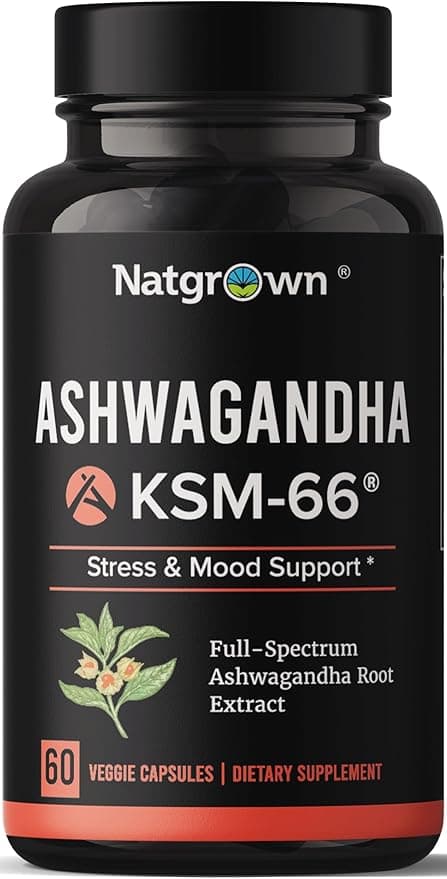
Natgrown Ashwagandha KSM-66 600mg — Organic Stress and Mood Support
KSM-66 is the gold-standard ashwagandha extract with the strongest clinical backing for cortisol regulation, mood support, and sleep. This formulation is organic, well-dosed, and I've been on it for over a year.
Give this one at least 4 to 6 weeks before deciding if it's working. Adaptogens don't hit immediately the way stimulants or sedatives do. The effect is cumulative.
Omega-3s for Brain, Joints, and Mood
Perimenopause is inflammatory. Estrogen has anti-inflammatory effects, and as it fluctuates and declines, inflammation quietly increases in ways that show up as joint pain, brain fog, mood changes, and worsening skin. Omega-3 fatty acids (specifically EPA and DHA) are one of the most effective ways to counteract that inflammation systemically.
I take fish oil daily. The research on omega-3s and perimenopause specifically is strong: studies have shown EPA and DHA reduce hot flash frequency, improve mood, support cognitive function, and protect cardiovascular health (which becomes more important as estrogen's cardioprotective effects decline).
What to look for: at least 1,000mg combined EPA and DHA per serving, third-party tested for purity (heavy metals, PCBs), and triglyceride form rather than ethyl ester form if possible. Cheap fish oil is often rancid by the time it reaches you, so quality matters more here than with other supplements.
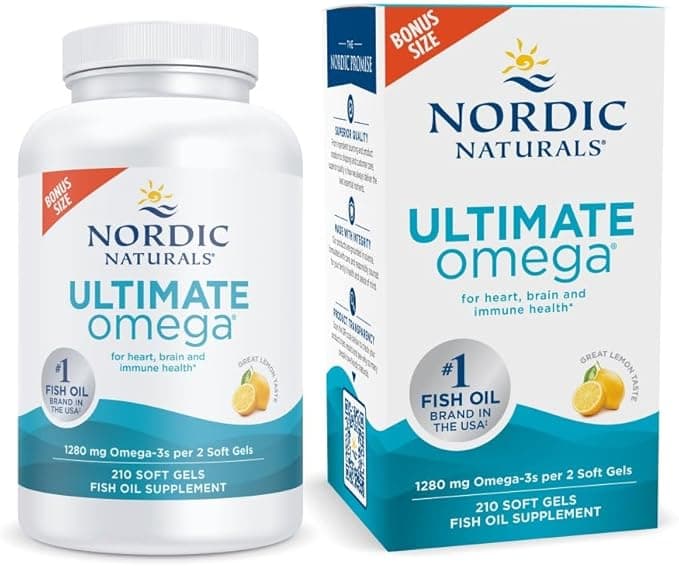
Nordic Naturals Ultimate Omega — 1280mg EPA and DHA per serving
High-potency fish oil in the better-absorbed triglyceride form. Third-party tested for purity, no fishy aftertaste, and the dose is high enough to actually deliver the anti-inflammatory benefits the research shows.
If you're vegetarian or vegan, look for algae-based DHA and EPA. The mechanism is the same, just sourced from the algae the fish eat rather than from the fish themselves.
Vitamin D, Because Almost Everyone Is Deficient
Vitamin D isn't technically a vitamin. It's a hormone, and it interacts with almost every other hormone in your body. Low vitamin D is associated with increased perimenopause symptoms, worsened mood, poorer sleep, bone loss (which accelerates as estrogen declines), and lower immunity.
Here's the part that matters: most women are deficient, and you can't guess your level from sun exposure or diet alone. Get tested. A serum 25-hydroxyvitamin D level of 50 to 70 ng/mL is the range most functional medicine doctors aim for, though standard labs often define "normal" as anything above 30. Anything below 30 is a real deficiency that warrants aggressive supplementation.
I take 4,000 IU of D3 with K2 daily. K2 is important because it directs calcium to your bones rather than your arteries, which becomes relevant as bone density becomes a concern in the decade around menopause. Take it with fat for absorption (breakfast with eggs or avocado works).
Creatine, Yes, Really
This one surprised me. Creatine has historically been marketed to gym bros, but the research on creatine for women in midlife is genuinely impressive. Creatine supports muscle mass (which declines faster during perimenopause), cognitive function, mood, and bone density. For women doing strength training (which you should be, see perimenopause weight changes for why), creatine amplifies your results.
I take 5 grams of creatine monohydrate daily, mixed into my morning coffee or a smoothie. It's flavorless and inexpensive. Creatine monohydrate is the only form with decades of safety and efficacy research behind it. Skip the fancy formulations and buy a plain tub from a reputable brand.
Expect to feel nothing dramatic for the first couple of weeks. The benefits are cumulative and show up as better workouts, easier muscle building, less mental fatigue, and improved recovery.
B-Complex for Energy and Methylation
B vitamins are the engines of your energy metabolism and neurotransmitter production. They're also water-soluble, which means you're not storing them long-term and need steady intake. Stress, alcohol, and hormonal shifts all deplete B vitamins faster than most women realize.
I take a methylated B-complex in the morning. "Methylated" means the vitamins are in their active forms (methylfolate instead of folic acid, methylcobalamin instead of cyanocobalamin). If you have an MTHFR gene variant (which is common), you don't convert the inactive forms efficiently, and taking methylated B vitamins makes a noticeable difference. Even if you don't, methylated forms are better absorbed.
Energy, focus, and mood stability all improved for me on a good B-complex. The trick is to take it in the morning. Bs tend to be mildly stimulating and can interfere with sleep if taken late in the day.
Probiotic for the Gut-Hormone Connection
Your gut microbiome directly influences how your body metabolizes estrogen. There's actually a specific subset of gut bacteria (the "estrobolome") responsible for processing estrogen, and an unhealthy gut can lead to estrogen recirculation in ways that worsen symptoms. Beyond hormones, gut health influences mood (via the gut-brain axis), immunity, nutrient absorption, and inflammation.
I take a multi-strain probiotic with at least 10 billion CFU and look for specific strains with research behind them (Lactobacillus rhamnosus, Bifidobacterium lactis, Lactobacillus plantarum). Shelf-stable is fine if it's a quality brand; refrigerated isn't inherently better.
I covered my specific picks in best probiotic for women, so I won't repeat the full rundown here. The short version: a daily probiotic is worth the money, especially if you've had antibiotics, are under chronic stress, or have any gut symptoms (bloating, irregularity, food sensitivities).
What I Stopped Buying
Equally important: the supplements I tried and quit because they weren't earning their place.
Maca root: I gave it four months. No noticeable benefit for me. The research is mixed, and I'd rather direct that supplement budget elsewhere.
Evening primrose oil: Widely marketed for perimenopause but the research is underwhelming. Didn't notice anything.
Black cohosh: Some women swear by it for hot flashes. I didn't get hot flashes, so I can't speak to that specifically, but I tried it for sleep and mood and saw no effect. If hot flashes are your main issue, it may be worth a trial, but do your research on quality and dose.
DIM (diindolylmethane): Popular in the hormone-balance supplement world. I tried it for a couple months. No clear benefit, and I had some mild digestive upset. Stopped.
Generic "hormone support" blends: Almost all of these contain tiny under-dosed amounts of several ingredients. You're better off buying the two or three things that actually work at clinical doses than a blend that gives you a sprinkle of everything.
Collagen for hormones: Collagen is fine for skin, hair, and joints, but it doesn't do anything for hormones specifically despite how it's marketed. I still take it, just not for the reasons the labels suggest. (More on that in benefits of collagen for women.)
How I Actually Take Them
Routines matter more than intentions, and I've simplified mine down so I actually stick with it.
Morning, with breakfast: Vitamin D3 + K2, B-complex, omega-3, ashwagandha, creatine (in my coffee or smoothie).
Evening, about an hour before bed: Magnesium glycinate, probiotic.
That's it. Seven supplements, two times a day. Everything else I've tried lives in a box in my pantry as evidence that more isn't better.
What to Prioritize If You Can Only Pick Three
If budget is a factor (and it usually is), here's where I'd put my money in descending order of impact:
- Magnesium glycinate (cheap and transformative)
- Omega-3 fish oil (foundational for inflammation and mood)
- Vitamin D3 + K2 (essential if you're deficient, which most people are)
Add ashwagandha as your fourth priority if cortisol and sleep are your dominant symptoms. Add creatine as your fifth if you're doing (or willing to do) strength training.
A Word on Bloodwork
Before you go nuclear on supplements, get real bloodwork. A full panel including ferritin (not just hemoglobin), vitamin D, B12, thyroid (TSH, free T3, free T4, antibodies), and a hormone panel if your symptoms warrant it. Supplementing in the dark is inefficient. Supplementing based on data is targeted.
I wrote about iron deficiency signs women often miss because ferritin in particular is routinely missed, and low ferritin can mimic or worsen perimenopause symptoms (fatigue, hair loss, brain fog, anxiety). If you haven't had ferritin specifically tested, that's a great place to start.
The Bottom Line
Supplements are the easy part of perimenopause. The hard part is the lifestyle work: sleep hygiene, strength training, blood sugar stability, stress management, real food, enough protein, real boundaries around your time and energy. None of the supplements in this post will work if those foundations are missing. All of them work better when the foundations are in place.
But once the basics are dialed in, the right supplements (magnesium, adaptogens, omegas, D3, creatine, a good B-complex, and a probiotic) can genuinely smooth out the rough edges of this transition. They did for me. I take them because I feel the difference when I run out, and that's the only metric that matters.
Your body is doing something significant. Give it the raw materials it needs, and it will largely take care of the rest.
You'll Also Love
- Benefits of Magnesium for Women
- Ashwagandha Benefits for Women
- Perimenopause Symptoms in Your 30s
- Natural Hormone Balance Tips
- Iron Deficiency Signs Women Often Miss