Best Probiotic for Women: What to Look for (Gut Health)
I want to talk about something that took me way too long to connect: the fact that my skin was breaking out along my chin and jawline, I was anxious all...
- The Gut-Brain Connection: Why Your Gut Is Basically a Second Brain
- The Gut-Skin Connection: Why Breakouts Might Be a Gut Problem
- Why Women Need Specific Probiotic Strains
- My Top Pick: Physician’s CHOICE Probiotics for Women
- What CFU Count Actually Means (And What It Doesn’t)
- Prebiotics: The Part Everyone Ignores
I want to talk about something that took me way too long to connect: the fact that my skin was breaking out along my chin and jawline, I was anxious all the time, I felt bloated after basically every meal, and I was exhausted by 3pm every afternoon — were all the same problem. I treated them as four separate problems for years. I bought different products for each one. I complained about each one separately. It never occurred to me that they shared a root cause.
The gut-brain-skin axis is real, it’s heavily researched, and understanding it changed how I approach my entire supplement routine. (If you’re just starting to explore this topic, my guide to gut health for women is a great place to begin.) When I started taking a quality women’s probiotic and genuinely paid attention to my gut health, I didn’t just stop being bloated. The chin acne cleared up. The mid-afternoon anxiety fog lifted. My energy got more consistent. It’s easy to sound woo-woo about this, but the science is actually pretty mind-blowing once you dig in.
This post is going to break down what’s actually happening in your gut, what strains matter specifically for women, and what makes a probiotic worth taking versus a waste of money.
The Gut-Brain Connection: Why Your Gut Is Basically a Second Brain

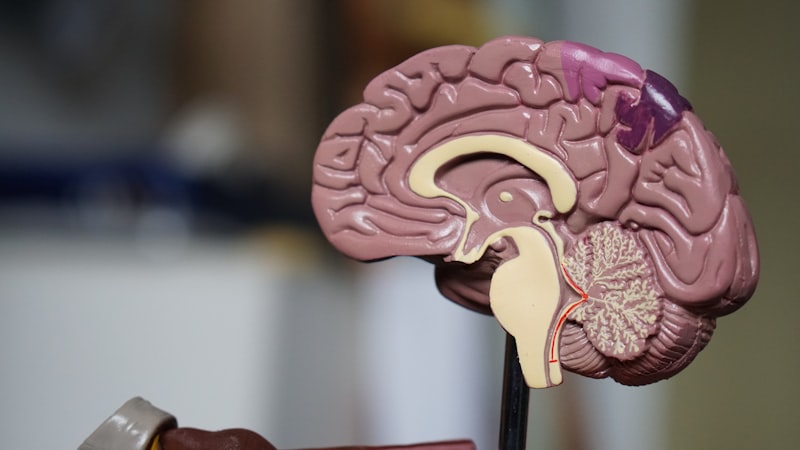
Your gastrointestinal tract contains approximately 500 million neurons — more than the spinal cord — and communicates bidirectionally with the brain through the vagus nerve in what’s called the gut-brain axis. Your gut bacteria produce and regulate neurotransmitters, including 90% of your body’s serotonin, 50% of your dopamine, and significant amounts of GABA. If your gut microbiome is out of balance, your brain chemistry is directly affected.
This isn’t a fringe theory. The research on the gut-brain axis is mainstream, peer-reviewed, and genuinely remarkable. Studies have found correlations between gut dysbiosis (imbalanced microbiome) and depression, anxiety, and cognitive impairment. Research in both animals and humans shows that manipulating gut bacteria can directly alter mood, stress response, and social behavior. A 2019 review in Nature Reviews Neuroscience described the gut microbiome as “critical for healthy brain function.”
What this means practically: if you’re dealing with mood issues, anxiety, or brain fog alongside digestive symptoms, your gut is a place to look first, not last.
The Gut-Skin Connection: Why Breakouts Might Be a Gut Problem
The gut-skin axis has been documented in research since the 1930s, when dermatologists first noted that patients with acne had higher rates of gastrointestinal dysfunction. The modern understanding is much more specific.
A dysbiotic gut (one where harmful bacteria outcompete beneficial ones) creates systemic inflammation. This inflammation manifests in the skin as acne, rosacea, eczema, and psoriasis. When gut permeability increases (“leaky gut”), lipopolysaccharides (LPS) from bacterial cell walls enter circulation and trigger an inflammatory immune response that shows up in the skin. Gut bacteria also regulate hormones including androgens — excess androgens are a primary driver of hormonal acne.
A 2011 study published in Gut Pathogens found that people with acne were significantly more likely to have intestinal permeability and dysbiosis. Multiple clinical trials have found that probiotic supplementation improves acne, rosacea, and skin barrier function. I am my own anecdote here: my jawline acne, which I’d attributed entirely to hormones, improved significantly within two months of consistent probiotic use alongside dietary changes.
Why Women Need Specific Probiotic Strains
Not all probiotics are the same, and the research on women’s-specific strains is actually quite specific. Here’s what matters:
Lactobacillus acidophilus and Vaginal Health
Lactobacillus acidophilus is the primary bacterial species that maintains a healthy vaginal microbiome. The vaginal environment is ideally acidic (pH 3.8–4.5), and Lactobacillus strains maintain this pH by producing lactic acid. Disruption of this balance leads to bacterial vaginosis (BV), yeast infections, and increased susceptibility to UTIs. Studies show that supplementing with L. acidophilus strains specifically formulated for vaginal health can reduce the recurrence of BV and yeast infections. If you’ve dealt with either of these, a women’s probiotic with specific vaginal-health strains is worth taking seriously.
L. rhamnosus and L. reuteri for Gut and Hormonal Health
These two strains have the strongest research base for gut health in women. L. rhamnosus GG is one of the most studied probiotic strains globally and has demonstrated benefits for diarrhea, IBS symptoms, and antibiotic-associated gut disruption. L. reuteri has been shown to positively influence testosterone and estrogen levels, reduce abdominal fat, improve insulin sensitivity, and modulate the stress response. A 2022 study found that women with PCOS who supplemented with L. reuteri showed improvements in insulin sensitivity and hormonal balance.
Bifidobacterium species for Bloating and Immune Function
Bifidobacterium longum, B. infantis, and B. lactis are the heavy hitters for reducing bloating, constipation, and IBS-type symptoms. (For more bloating-specific strategies, see my post on natural remedies to reduce bloating.) B. infantis in particular has been studied extensively for irritable bowel syndrome and found to significantly reduce abdominal pain, bloating, and bowel urgency. Bifidobacterium strains also play a critical role in immune function — they’re the dominant beneficial bacteria in the infant gut, and adults who maintain healthy Bifidobacterium populations have stronger immune responses.
My Top Pick: Physician’s CHOICE Probiotics for Women
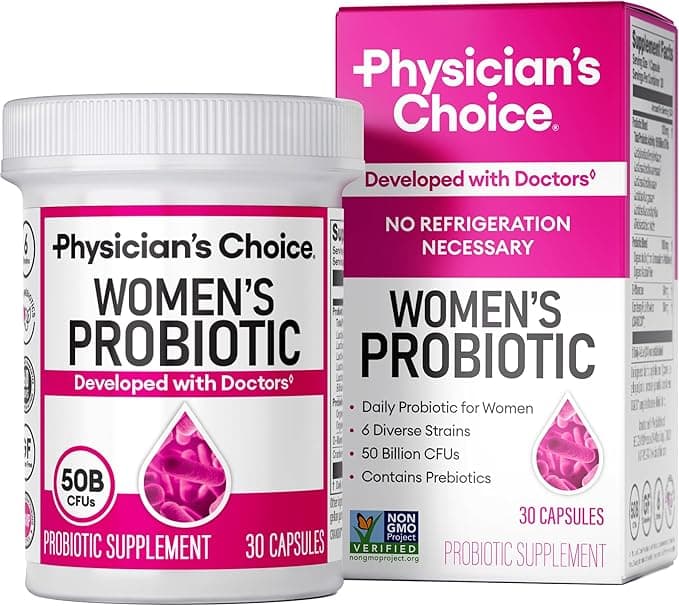
Physician’s CHOICE Probiotics for Women — 50 Billion CFU
The bestseller in women’s probiotics for good reason. 50 Billion CFU, 6 strains selected specifically for women’s health including pH balance, digestive, urinary, and feminine health support. Includes organic prebiotics and cranberry extract. 54,000+ verified reviews. This is the one I recommend most.
What CFU Count Actually Means (And What It Doesn’t)
CFU stands for Colony Forming Units — it’s the number of viable bacterial cells in the supplement. You’ll see numbers ranging from 1 billion to 500 billion CFU. Bigger number = better? Not exactly.
The research on optimal CFU dosing is actually quite nuanced. Higher CFU counts can overwhelm a severely disrupted gut or cause temporary symptoms (gas, bloating, loose stools) during the adaptation period. For daily maintenance, 10–50 billion CFU with well-researched strains is supported by the evidence base. Where very high CFU counts (100 billion+) show benefit is in specific situations: during or after antibiotic use, during active gut infections, or for people with diagnosed gut dysbiosis.
More important than CFU count is strain diversity and quality. Ten well-selected strains at 25 billion CFU will outperform two generic strains at 100 billion CFU for most people. Look for strains with their specific identification codes listed (e.g., Lactobacillus acidophilus NCFM, not just “Lactobacillus acidophilus”) — this indicates the manufacturer used clinically studied strains.
Prebiotics: The Part Everyone Ignores
Prebiotics are non-digestible fibers that feed your beneficial gut bacteria. Without adequate prebiotic intake, your probiotic bacteria have nothing to eat and can’t colonize effectively. Think of it this way: probiotics are seeds, prebiotics are fertilizer.
The best probiotic supplements now include prebiotics alongside probiotics (sometimes marketed as “synbiotics”). But you also want to support them through diet: garlic, onions, leeks, asparagus, oats, bananas (especially slightly underripe ones), and flaxseed are all excellent prebiotic foods. If your diet is low in these, a supplement with inulin or FOS (fructooligosaccharides) can help.
More Women’s Probiotics Worth Considering

Garden of Life Once Daily Women’s Probiotic
50 Billion CFU, 16 probiotic strains formulated specifically for women’s digestive, vaginal, and immune health. Shelf-stable (no refrigeration needed), dairy-free, and certified gluten-free. Includes organic prebiotics. A premium option that’s been trusted in the women’s health space for years.

Renew Life Women’s Probiotic — 25 Billion CFU
A lower CFU option for those who want a gentler start or don’t need a high-potency formula. Renew Life is a pioneer in women’s probiotic research and their formulas are well-studied. Shelf-stable, soy/dairy/gluten-free. 29,000+ verified reviews. Great for daily maintenance once your gut is already in decent shape.
How to Actually Take Probiotics (Most People Get This Wrong)
The timing and method of taking your probiotic matters more than most people realize:
-
With food or right before a meal. Gastric acid destroys live bacteria. Taking probiotics with food raises gastric pH slightly and provides something for the bacteria to cling to as they transit through the stomach. Studies show up to 45% higher survival of bacteria when taken with a meal versus on an empty stomach.
-
Consistency over intensity. Probiotic bacteria don’t permanently colonize the gut — they need to be resupplied regularly. Once you stop taking them, most strains are gone within a few weeks. Daily supplementation maintains populations.
-
Don’t take right before or after antibiotics. Antibiotics kill both bad and good bacteria. Taking your probiotic too close to an antibiotic dose reduces its effectiveness. Space them at least 2 hours apart. After finishing antibiotics, take a higher-CFU probiotic for 2–4 weeks to restore gut populations.
-
Give it 4–6 weeks. Like most supplements, probiotics take time. Some people feel initial digestive changes (good or bad) in the first week, but meaningful microbiome shifts take 4–8 weeks of consistent use.
What to Eat to Amplify Your Probiotic
A probiotic supplement is a starting point, not a complete solution. The most powerful thing you can do alongside supplementation is add fermented foods to your diet:
-
Yogurt with live cultures (look for the Live & Active Cultures seal)
-
Kefir — more probiotic strains and CFUs than most supplements
-
Kimchi and sauerkraut — fermented vegetables, rich in Lactobacillus
-
Miso — fermented soy, great in dressings and soups
-
Kombucha — fermented tea with live cultures (watch the sugar content)
-
Tempeh — fermented soybeans, excellent protein source with probiotic benefit
Eating a diverse diet high in fiber, vegetables, and fermented foods creates an environment where probiotic bacteria can thrive. A supplement without dietary support is fighting uphill.