Family Meal Planning Tips That Actually Work (From a Busy Mom)
Simple meal planning tips for busy families. Batch cooking, kid-friendly recipes, weekly planning systems, and how to involve kids in the kitchen.
Disclosure: This post contains affiliate links. If you purchase through my links, I may earn a small commission at no extra cost to you. I only recommend products I genuinely love and believe in. Thank you for supporting Eventful Eve! 🤍
I used to be the person standing in front of the open fridge at 5pm, staring at a random assortment of ingredients like they might spontaneously assemble themselves into dinner. The kids are melting down, I'm starving, and suddenly takeout starts looking like a completely reasonable life choice. Again. For the third time this week.
Meal planning changed that for us. Not in a Pinterest-perfect, color-coded spreadsheet kind of way — in a realistic, "I know what we're eating and I have the stuff to make it" kind of way. It took me a while to find a system that actually stuck, because most of the meal planning advice out there is designed for people with more time, energy, and enthusiasm for cooking than I have on any given Tuesday. This is the version that works for real life.
Why Meal Planning Matters (Beyond the Obvious)
Yes, meal planning saves money and reduces food waste. You already know that. But here's what nobody talks about enough: it saves decision fatigue. By the time dinner rolls around, I've already made approximately ten thousand decisions that day. Taking "what's for dinner" off the list is a genuine mental health win. You're not just planning food — you're protecting your bandwidth for the parts of parenting that actually need your brain.
It also means fewer emergency grocery runs, less impulse spending, and honestly fewer arguments. When everyone knows what's coming, the "I don't want that" negotiations decrease significantly. Not to zero — my kids are still kids — but significantly.
And here's the part that surprised me most: meal planning actually makes me more creative in the kitchen, not less. When I plan ahead, I try new recipes because I have the right ingredients on hand. When I wing it, I default to the same five things because that's all I can pull together at the last minute with what's in the fridge. Planning creates room for variety; chaos creates ruts.
The Weekly Planning System That Stuck
I've tried monthly meal planning, elaborate recipe binders, and multiple apps. Here's what actually works for us — a simple weekly system:
Sunday planning session (15 minutes). That's it. Fifteen minutes with a cup of coffee, my phone, and a notepad. I look at the week ahead — what nights are busy, what's already in the fridge and freezer, and what sounds good. Then I fill in seven dinners. I keep breakfast and lunch simple and repetitive (more on that below), so they don't need to be planned.
Theme nights. This is the secret weapon that took our meal planning from stressful to brainless. We rotate themes:
- Monday: Pasta night (spaghetti, baked ziti, mac and cheese, pesto pasta)
- Tuesday: Taco/Mexican night (tacos, burritos, quesadillas, taco soup)
- Wednesday: Soup and bread night (especially in cooler months)
- Thursday: Sheet pan or one-pot dinner (minimal cleanup, maximum sanity)
- Friday: Pizza night (homemade, frozen, or takeout — all valid)
- Saturday: Grill or new recipe night (when there's actually time to try something different)
- Sunday: Leftovers, breakfast for dinner, or crockpot meal
You're not locked in — the themes are just guardrails. When I sit down on Sunday and think "what pasta should we do this week?" instead of "what should we eat for seven nights?" the whole process gets infinitely easier.
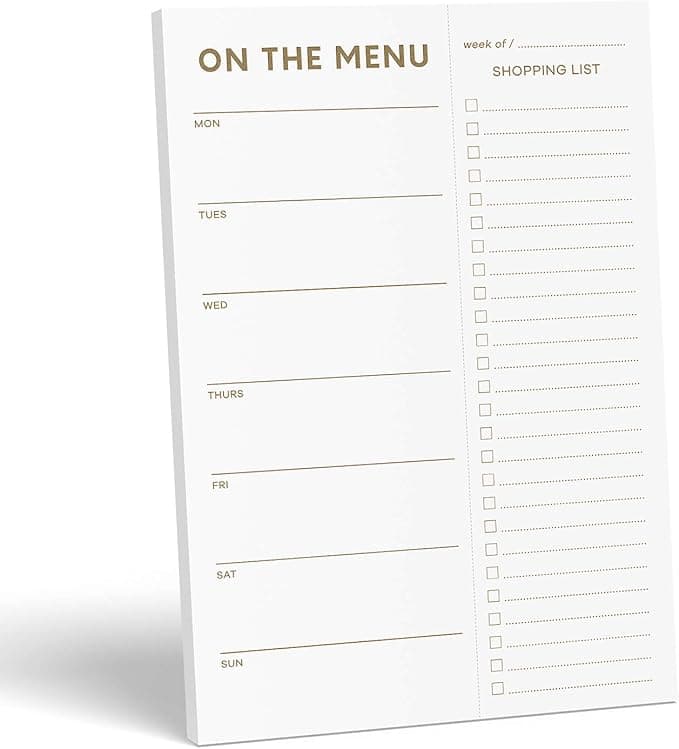
Sweetzer & Orange Gold Magnetic Meal Planner & Grocery List Notepad
A simple magnetic meal planning pad that sticks to the fridge with space for every night of the week plus a grocery list, which is exactly the low-tech system that makes Sunday planning sessions take fifteen minutes instead of an hour.
One grocery trip. I shop once a week, on Sunday. The list comes directly from the meal plan plus standard staples. In and out. Done. I organize the list by store section (produce, dairy, meat, pantry) so I'm not zigzagging through aisles. This sounds like a small thing, but it shaves at least fifteen minutes off every shopping trip, and those minutes add up.
Keep a running list. Throughout the week, when we run out of something or I think of something we need, it goes on the list immediately. I keep a note on my phone for this — nothing fancy, just a running tally. By the time I sit down Sunday to plan, half the grocery list is already done.
Batch Cooking That Actually Helps
I'm not going to tell you to spend your entire Sunday cooking 47 freezer meals. That's never happening in this house. But strategic batch cooking — where you prep a few things that make the whole week easier — is a game-changer.
Cook double protein. When I'm making ground beef for tacos on Tuesday, I cook a double batch. The extra goes into Wednesday's soup or Thursday's sheet pan dinner. Same with chicken — grill or bake extra and use it all week in different ways.
Prep the annoying stuff. Sunday evening, I wash and chop vegetables, cook a pot of rice or quinoa, and hard-boil a dozen eggs. These aren't meals — they're building blocks that make every meal faster during the week.
Keep a freezer stash. Whenever I make soup, chili, or casseroles, I make extra and freeze individual portions. On the nights when everything falls apart (and it will), a homemade freezer meal heated up in 10 minutes is worth its weight in gold.
Breakfast prep. We make a big batch of muffins, overnight oats, or egg muffin cups on Sunday. Weekday breakfasts basically handle themselves. Having grab-and-go breakfast options means mornings are calmer, kids can serve themselves, and I'm not standing at the stove when I should be getting the day started.
The freezer is your best friend. I cannot stress this enough. A well-stocked freezer is the difference between a reasonable Tuesday dinner and a stress spiral. Beyond meals, I freeze bread, shredded cheese, butter, fruit for smoothies, and cookie dough. The freezer is where planning ahead and surviving hard weeks intersect.
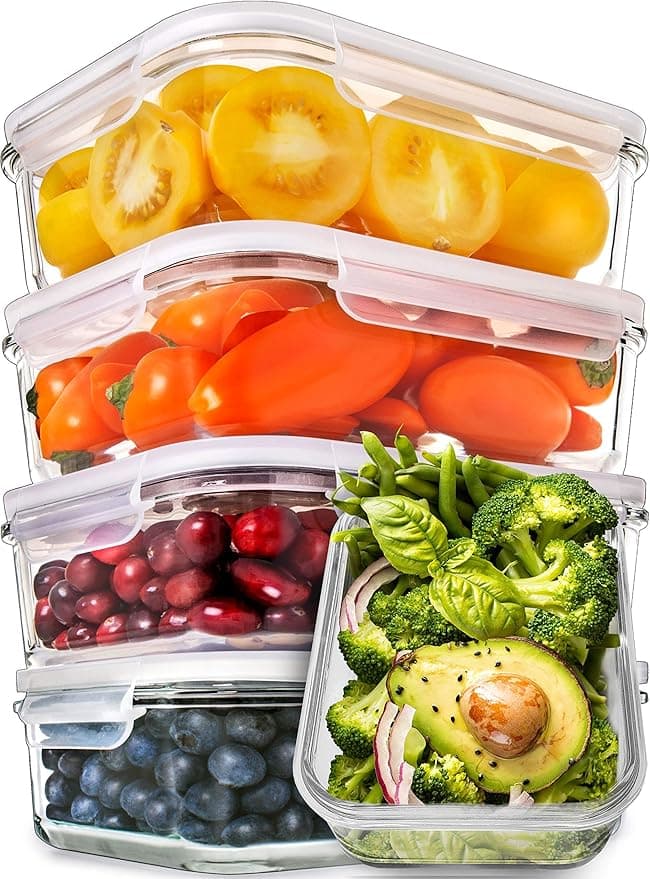
PrepNaturals 5-Pack 30oz Glass Meal Prep Containers — Multi-Compartment with Lids
Sturdy glass meal prep containers that go from freezer to microwave to dishwasher, making batch cooking and freezer stash meals actually practical instead of a leaky, stained mess of mismatched plastic.
Kid-Friendly Meals Everyone Will Eat (Mostly)
Let me be clear: I do not make separate meals for my kids. We eat the same dinner. But I've learned to build meals in a way that gives everyone something they'll eat without making my life harder:
The "deconstructed" approach. Instead of serving a fully assembled stir-fry, I put the rice, protein, and vegetables in separate bowls and let everyone build their own. Same ingredients, everyone's happy. This works for tacos, pasta bowls, salads, and grain bowls.
Always include one safe food. If I'm making something adventurous, I make sure there's at least one component on the plate that I know each kid will eat — bread, fruit, rice, whatever. They don't have to eat everything, but they're not going to starve either.
The "no thank you bite" rule. You have to try one bite. If you don't like it, you don't have to eat more. This has been our policy since they were toddlers, and over time it's genuinely expanded their palates. Foods they "hated" at four became favorites by six.
Repeat winners shamelessly. If everyone loves a particular meal, it goes into heavy rotation. There's no rule that says you can't eat the same ten dinners forever. Those ten reliable meals are your foundation — everything else is just experimentation.
Our Go-To Family Meals
These are the recipes I come back to over and over because they're fast, everyone eats them, and they require no special skills:
- One-pot chicken and rice — chicken thighs, rice, broth, and whatever vegetables are in the fridge. Everything in one pot, 30 minutes.
- Sheet pan sausage and vegetables — cut everything up, toss with olive oil and seasoning, roast at 400 degrees for 25 minutes. Done.
- Black bean quesadillas — canned black beans, cheese, tortillas, and whatever toppings you want. Five minutes and no one complains.
- Crockpot chicken tacos — chicken, salsa, taco seasoning in the slow cooker for 6 hours. Shred and serve. The easiest dinner that exists.
- Breakfast for dinner — scrambled eggs, pancakes or waffles, fruit. Kids act like this is the most exciting meal of the week, and it takes ten minutes.
- Pasta with hidden-veggie sauce — blend roasted vegetables into marinara. They don't know, and I'm not telling them.
- Homemade pizza — store-bought dough, sauce, cheese, and whatever toppings. Let the kids make their own. Messy, fun, and everyone eats.
- Baked potato bar — bake a bunch of potatoes, set out toppings (butter, cheese, sour cream, broccoli, chili, bacon bits), and let everyone build their own. Potatoes are cheap, filling, and versatile.
- Fried rice — the ultimate fridge-cleanout meal. Day-old rice, whatever vegetables you have, eggs, soy sauce. Done in ten minutes and endlessly adaptable.
- Chicken noodle soup — especially in cooler months, a pot of soup with a loaf of crusty bread is a complete meal that takes minimal active cooking time.
The key with all of these is that they're not fancy. They use regular ingredients. They don't require special skills or equipment. And my kids eat them without drama. That's the trifecta.
Getting Kids Involved in the Kitchen
This is the long game, and it's worth it. Yes, it's slower. Yes, it's messier. But kids who help cook are more likely to eat what's made, and you're teaching them a life skill they'll use every single day as adults.
Age 2-3: Washing produce, tearing lettuce, stirring things (with help), dumping pre-measured ingredients into bowls.
Age 4-5: Spreading, mashing, rolling dough, cracking eggs (with some casualties), setting the table, simple measuring.
Age 6-8: Using a kid-safe knife, following simple recipes with help, loading the dishwasher, making their own sandwiches and snacks.
Age 9-12: Cooking simple meals independently (with supervision), reading and following recipes, understanding food safety basics like proper temperatures and handwashing.
Start where your kid is, not where you think they should be. The goal is competence and confidence, not perfection. The kitchen will be messier. The meals will take longer. But the investment pays off — my oldest can now make scrambled eggs, quesadillas, and basic pasta all by herself, and that's one less meal I have to handle.
Snacks That Keep Everyone Going
Meal planning gets all the attention, but snacks are what hold the day together. Hungry kids between meals are cranky kids, and cranky kids make everything harder. Here's how I handle snacks without losing my mind:
Prep a snack bin. At the beginning of each week, I fill a bin in the fridge and a basket on the counter with grab-and-go options. Fridge bin: cut veggies, cheese sticks, yogurt tubes, hummus cups, grapes, hard-boiled eggs. Counter basket: granola bars, crackers, dried fruit, applesauce pouches. The kids can help themselves without asking, which means fewer interruptions for me and more autonomy for them.
Make snack plates. When my kids say they're hungry between meals, I put together a small plate with three or four items — some fruit, some protein, something crunchy. It looks more appealing than a single item, they eat more variety, and I can use up odds and ends from the fridge. Some people call this a "snack board" and make it Instagram-worthy. I call it "using up the last of the strawberries before they go bad."
Don't stress about snack perfection. Sometimes the snack is an apple. Sometimes it's goldfish crackers. Sometimes it's both. They're fine.
Meal Planning When You're Barely Surviving
Some seasons of life don't leave room for planning. New baby, illness, major life transition — sometimes you're just trying to get food on the table at all. For those times:
- Keep frozen meals stocked (no shame in frozen pizza and chicken nuggets)
- Say yes to every offer of a meal from friends or family
- Rotisserie chicken is an entire meal plan — eat it plain, shred it for tacos, put it on salads, add it to soup
- Sandwiches are dinner. Cereal is dinner. Whatever gets everyone fed is dinner.
- Use grocery pickup or delivery if it's available to you — the small fee is worth the time and energy saved
- Paper plates are fine. Disposable everything is fine. Survival seasons aren't the time to optimize.
- Accept that some weeks, the best you can do is keep everyone fed, and that is enough
You'll come back to meal planning when you have the bandwidth. There's no failure in feeding your kids cereal for dinner during a hard week. Zero.
The Long Game
Meal planning isn't about having a perfect system. It's about reducing the daily decision of "what are we eating?" down to a quick glance at a list instead of a panicked scramble at 5pm. Some weeks you'll nail it. Other weeks, the plan will fall apart by Wednesday and you'll order pizza. Both of those weeks are fine.
The biggest shift for me wasn't finding the perfect meal plan — it was letting go of the idea that every dinner needs to be special, Instagram-worthy, or made from scratch. My kids don't need restaurant-quality meals. They need to be fed, regularly, with reasonable nutrition, by a parent who isn't losing their mind over it. Meal planning gets you there. Start this Sunday with fifteen minutes and a cup of coffee. You'll be amazed how much calmer your week feels.