Best Kids' Books by Age: Our Family's Favorite Reads
The best kids' books by age group, from board books to chapter books. Our family's tried-and-true recommendations for every stage of reading.
Disclosure: This post contains affiliate links. If you purchase through my links, I may earn a small commission at no extra cost to you. I only recommend products I genuinely love and believe in. Thank you for supporting Eventful Eve! 🤍
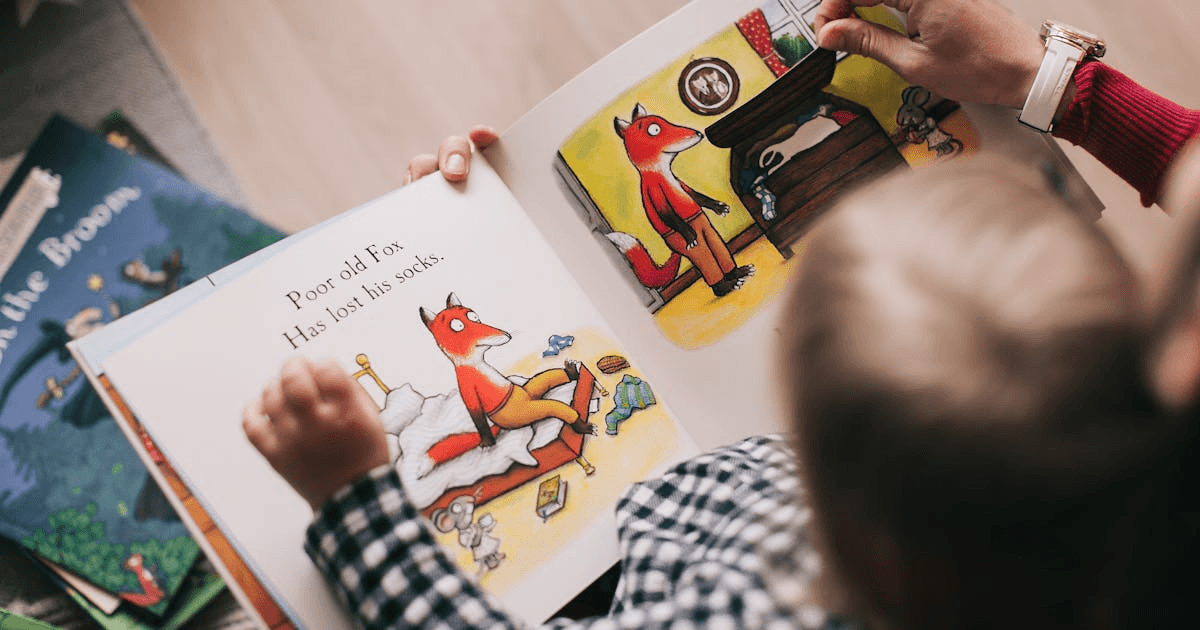
If there's one thing I will never stop spending money on, it's books. I'll thrift the clothes, skip the fancy toys, and make do with hand-me-down everything — but the book budget is sacred in this house. We have books in every room, books in the car, books in backpacks, and a library card that gets more use than any subscription we own. Reading together has been one of the most connective, educational, and genuinely joyful parts of raising my kids. And finding the right book at the right stage? It makes all the difference between a child who tolerates reading and one who begs for one more chapter.
This is our family's curated list — the books that have been read dozens of times, requested by name, cried over, laughed at, and passed to friends. Organized by age group so you can find exactly what you need.
A note before we dive in: reading levels vary enormously within any age group, so use these categories as loose guidelines, not rules. You know your child best. If your three-year-old is ready for early readers or your seven-year-old still loves picture books, go with what fits. The right book is the one they want to read again tomorrow.
Board Books (0-2 Years)
Board books take a beating, and that's the point. These are the ones that survived being chewed, thrown, and loved to pieces in our house:
"Goodnight Moon" by Margaret Wise Brown. There's a reason this book has been in print since 1947. The quiet rhythm, the repetition, the gradual darkening of the room — it's the perfect wind-down. We read this every single night for about a year straight and I never got tired of it.
"Brown Bear, Brown Bear, What Do You See?" by Bill Martin Jr. The repetitive pattern is perfect for babies starting to understand language. By about 15 months, both my kids could "read" this one to me from memory, and the pride on their faces was everything.
"The Very Hungry Caterpillar" by Eric Carle. Interactive, colorful, and it teaches counting, days of the week, and food names without trying. The little finger holes are irresistible to tiny hands.
"Dear Zoo" by Rod Campbell. Lift-the-flap books are baby crack, and this is the best one. Simple, repetitive, and every toddler I've ever met loves guessing which animal comes next.
"Where's Spot?" by Eric Hill. Another perfect lift-the-flap book. Short enough for the shortest attention spans, interactive enough to keep them engaged.
"Peek-a-Who?" by Nina Laden. A die-cut board book with simple rhyming text and peek-through windows. Babies love guessing what's behind each page, and the sturdy pages hold up to aggressive handling. This is one of those books that works from about six months all the way through age two.
A note on board books: Don't overthink this stage. Babies need books they can hold, chew, and interact with. The content matters less than the habit of sitting with a book. Read to them in silly voices, point at pictures, let them turn the pages (even backwards). You're not teaching reading — you're teaching that books are wonderful objects to spend time with.
Picture Books (3-5 Years)
This is the golden age of picture books, and honestly, I could write an entire separate post just about this category. These are the standouts:
"The Day the Crayons Quit" by Drew Daywalt. Funny, clever, and visually gorgeous. Each crayon writes a letter of complaint about how they're being used, and kids find it absolutely hilarious. This is one of those books that adults genuinely enjoy reading aloud too.
"Last Stop on Market Street" by Matt de la Pena. This book is beautiful and important. A boy rides the bus with his grandmother through the city, noticing beauty in unexpected places. It opens up conversations about gratitude, community, and seeing people with kind eyes.
"Dragons Love Tacos" by Adam Rubin. Pure silliness, and sometimes that's exactly what you need. The concept alone — dragons who love tacos but have a catastrophic reaction to spicy salsa — had my kids in stitches. Great for reluctant listeners.
"Ada Twist, Scientist" by Andrea Beaty. A curious girl who never stops asking "why?" This book celebrates the scientific mind and the mess that comes with genuine curiosity. Part of an excellent series that also includes "Rosie Revere, Engineer" and "Iggy Peck, Architect."
"The Giving Tree" by Shel Silverstein. I know this one is polarizing. Some people find it beautiful, others find it troubling. We read it and talk about it — about generosity, about boundaries, about what love looks like. That conversation is worth the read regardless of where you land on the message.
"Corduroy" by Don Freeman. A bear in a department store looking for a missing button. The story is gentle and sweet, about wanting to belong and being loved as you are. It's a short, easy read that packs a surprising emotional punch for both kids and adults.
"Not a Box" by Antoinette Portis. Minimal text, maximum imagination. A rabbit insists that its box is not a box — it's a race car, a mountain, a robot. This book celebrates creative play in the simplest possible way, and after reading it, every cardboard box in your house becomes a portal to somewhere else.
Early Readers (5-7 Years)
The transition from being read to to reading independently is huge, and having the right books at this stage matters enormously. Too hard and they get frustrated. Too babyish and they lose interest. These hit the sweet spot:
The Elephant and Piggie series by Mo Willems. If your early reader isn't into these yet, go get one immediately. The humor is genuinely funny (not dumbed down), the text is manageable for emerging readers, and the emotional range these two characters cover is surprisingly deep. "We Are in a Book!" is our family favorite.
The Mercy Watson series by Kate DiCamillo. A pig who loves butter toast and gets into ridiculous adventures. The chapters are short, the text is accessible, and the stories are genuinely entertaining. This series bridged the gap between picture books and chapter books for both of my kids.
"Frog and Toad" by Arnold Lobel. Timeless and gentle. The friendship between Frog and Toad is one of the sweetest in children's literature, and the stories are simple enough for new readers to tackle independently while being meaningful enough to still resonate with adults.
Dog Man series by Dav Pilkey. Look, they're not literary masterpieces. But if your kid is a reluctant reader, Dog Man might be the gateway drug that gets them hooked on books. The graphic novel format is accessible, the humor is right at kid-level, and there's genuine creativity in the storytelling. I'll take a kid who devours Dog Man over a kid who won't touch a book any day.
A note on graphic novels and comics: Some parents feel like graphic novels "don't count" as real reading. I disagree strongly. Graphic novels require reading text, interpreting images, and synthesizing both simultaneously — that's a sophisticated literacy skill. If comics get your kid reading, celebrate it. The transition to text-heavy books happens naturally when the reading habit is already established.
Chapter Books (7-10 Years)
This is where reading really takes off. Your child can handle longer stories, more complex plots, and characters that grow over time:
The Magic Tree House series by Mary Pope Osborne. History, geography, and adventure wrapped up in short, manageable chapters. We've used these as jumping-off points for so many rabbit holes — reading about ancient Egypt, then looking it up on the map, then watching a documentary. Perfect for curious minds.
"Charlotte's Web" by E.B. White. The first book that made my oldest cry, and honestly it gets me every time too. The writing is exquisite, the themes of friendship and loss are handled with such grace, and it opens the door to conversations that matter.
The Ramona series by Beverly Cleary. Ramona Quimby is every strong-willed, big-feeling kid. My daughter saw herself in Ramona so clearly, and it helped her understand that her intensity isn't a flaw — it's a strength. These books have aged remarkably well.
"Hatchet" by Gary Paulsen. For the kid who loves survival stories. A boy alone in the Canadian wilderness with nothing but a hatchet. My son couldn't put this one down, and it sparked an entire phase of building shelters in the backyard and learning about wilderness skills.
The Chronicles of Narnia by C.S. Lewis. Rich, imaginative, and rewarding on multiple levels. We read these aloud as a family and the discussions were wonderful. Start with "The Lion, the Witch and the Wardrobe" and go from there.
"Holes" by Louis Sachar. A boy sent to a juvenile detention camp where the punishment is digging holes in a dry lake bed. The story weaves together multiple timelines and mysteries in a way that kids find absolutely gripping. This is one of those books that teaches sophisticated literary concepts — foreshadowing, parallel narratives, irony — without ever feeling like it's teaching anything. It's just a really, really good story.
The Penderwicks series by Jeanne Birdsall. Four sisters and their adventures over several summers. Warm, funny, and deeply character-driven. If your kids love stories about families and friendships, this series will become a favorite. My daughter has read the first one three times.
Read-Alouds for the Whole Family
Some of our best family memories are from read-aloud time. These are the books that work for a range of ages and make everyone want to gather on the couch:
"The One and Only Ivan" by Katherine Applegate. Based on a true story of a gorilla living in a mall. Beautiful, heartbreaking, and hopeful. Short chapters make it perfect for reading aloud, and it sparked incredible conversations about animals, empathy, and doing the right thing.
"Pippi Longstocking" by Astrid Lindgren. Wild, funny, and totally unpredictable. Pippi is the kid every child wishes they could be — absurdly strong, completely independent, and never ever boring. These books hold up beautifully for read-aloud time.
The "Little House" series by Laura Ingalls Wilder. History comes alive through Laura's eyes. We read through the entire series over the course of a year, and my kids still reference things they learned. It's slow, it's detailed, and it's absolutely engrossing.
"The BFG" by Roald Dahl. Dahl's language play is made for reading aloud. The Big Friendly Giant's creative vocabulary ("whizzpopping," "human beans") had my kids giggling nonstop, and the story itself is sweet and imaginative.
"My Side of the Mountain" by Jean Craighead George. A boy runs away to live in the Catskill Mountains, learning to survive on his own. This book is riveting for the whole family — the survival details are fascinating and the independence theme resonates with kids of all ages. It sparked weeks of wilderness skill practice in our backyard.
"Mrs. Frisby and the Rats of NIMH" by Robert C. O'Brien. A widowed mouse trying to save her family discovers a colony of superintelligent rats. The story is suspenseful and thought-provoking, and the themes of courage, community, and doing what's right make for incredible family discussions. This was the book that made my son say "can we please read just one more chapter?" every single night.
How We Choose Books
With so many books available, finding the good ones can feel overwhelming. Here's how I narrow it down:
Ask librarians. They are underused experts. Tell them your child's age, reading level, and interests, and they will hand you a perfect stack. Our librarian knows my kids by name and has never steered us wrong.
Follow trusted book lists. I keep a running list on my phone of books recommended by friends, homeschool groups, and book-loving accounts I follow online. When we head to the library, I consult the list instead of wandering aimlessly.
Let kids follow rabbit trails. If your child loves a book about volcanoes, get five more books about volcanoes. If they devour one book in a series, get the rest. Interest-led reading builds the habit faster than any curated list ever could.
Don't gatekeep. Not every book needs to be a classic or a literary award winner. Graphic novels count. Joke books count. Captain Underpants counts. The goal in the early years is volume and joy — the sophistication comes later, and it comes more easily when the habit is already solid.
Tips for Building a Reading Culture at Home
Finding great books is only part of it. Here's what's helped us build a home where reading is just what we do:
Make books accessible. We have baskets of books in the living room, on nightstands, and in the car. When books are within arm's reach, kids pick them up.
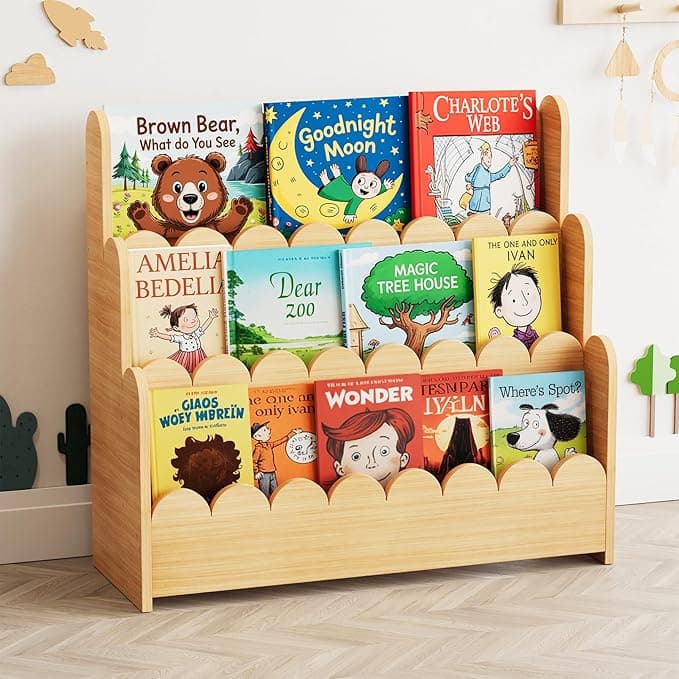
Kids' Front-Facing Bookshelf — Wooden Book Display Rack
A front-facing book display that lets kids see the covers instead of just spines, making it infinitely easier for them to browse and choose books on their own, which is half the battle in building a reading habit.
Read aloud longer than you think you should. Don't stop reading aloud when your child can read independently. Read-aloud time is bonding time, and you can tackle more complex, beautiful stories together than they might choose on their own.
Let them see you read. Kids imitate what they see. If they see you scrolling your phone, they'll want a screen. If they see you reading a book, they'll reach for one too.
Never make reading a punishment or a chore. The fastest way to kill a love of reading is to make it an assignment. Keep it joyful.
Use the library relentlessly. We go every week. Let them pick whatever they want. Not every book needs to be educational or parent-approved. If it gets them reading, it counts.
Create reading rituals. We read aloud every night before bed — it's as non-negotiable as brushing teeth. We also do "reading time" after lunch where everyone grabs a book and reads quietly for 20-30 minutes. These rituals create structure around reading without making it feel forced, and over time they become the parts of the day that everyone looks forward to.
Gift books generously. Books make excellent birthday gifts, holiday gifts, and "just because" gifts. We give our kids books for every occasion, and they associate receiving a book with something exciting rather than something boring. A stack of new books wrapped up individually? That's a celebration in our house.
Talk about what you're reading. Not in a book-report way — just casually. "I read the funniest thing today" or "my book made me cry last night." When kids see that reading is something adults do for pleasure and talk about enthusiastically, they internalize that reading is a normal, enjoyable part of life. It's caught more than taught.