Seed Cycling for Hormones — Does It Work? (How to Start)
Seed cycling for hormone balance — what it is, the evidence behind it, the protocol, and how to start. A practical guide to flax, pumpkin, sesame, and sunflower seeds.
Disclosure: This post contains affiliate links. If you purchase through my links, I may earn a small commission at no extra cost to you. I only recommend products I genuinely love and believe in. Thank you for supporting Eventful Eve! 🤍
Seed cycling is one of those wellness practices that sounds almost too simple to be real. Eat specific seeds during specific phases of your menstrual cycle to support hormone balance? Really? I was skeptical too. But after looking into the nutritional science behind the seeds themselves and trying the protocol for several months, I think it's one of those low-risk, potentially meaningful practices that's worth understanding — especially if you're dealing with PMS, irregular cycles, or early perimenopause symptoms.
Let me be upfront: the direct clinical research on seed cycling as a formalized protocol is limited. There are no large-scale randomized controlled trials on seed cycling specifically. But the individual nutrients in the seeds involved — lignans, zinc, selenium, omega-3 and omega-6 fatty acids — have solid research supporting their roles in hormone metabolism. So even if the practice itself hasn't been formally studied as a whole, the components have evidence behind them.
What Is Seed Cycling?
Seed cycling is a dietary practice that involves eating specific seeds during the two main phases of your menstrual cycle to support the natural hormonal shifts that occur during each phase.
Phase 1 — Follicular Phase (Day 1 to ovulation, roughly days 1–14):
- 1 tablespoon ground flaxseeds
- 1 tablespoon ground pumpkin seeds
Phase 2 — Luteal Phase (Ovulation to period, roughly days 15–28):
- 1 tablespoon ground sesame seeds
- 1 tablespoon ground sunflower seeds
The idea is that the nutrients in each seed pair support the hormonal priorities of each phase. During the follicular phase, your body is building up estrogen in preparation for ovulation. Flaxseeds contain lignans — phytoestrogens that can help modulate estrogen levels (they have a mild estrogenic effect when estrogen is low and can help bind excess estrogen when it's too high). Pumpkin seeds are rich in zinc, which supports progesterone production that you'll need after ovulation.
During the luteal phase, when progesterone should be dominant, sesame seeds provide lignans that help modulate estrogen on its way back down, while sunflower seeds deliver selenium and vitamin E, both of which support progesterone production and reduce inflammation.
The Evidence — What We Know and Don't Know
Let me be honest about the research landscape. There are no peer-reviewed clinical trials titled "The Effects of Seed Cycling on Menstrual Cycle Regularity." That study doesn't exist yet. What does exist is robust research on the individual nutrients involved.
Flaxseed lignans and estrogen metabolism: Multiple studies have shown that flaxseed consumption can influence estrogen metabolism, lengthen the luteal phase, and reduce anovulatory cycles. One study published in the Journal of Clinical Endocrinology & Metabolism found that flaxseed supplementation was associated with improved ovulatory function.
Zinc and progesterone: Zinc is essential for the production and secretion of progesterone and for the function of the corpus luteum (the structure that produces progesterone after ovulation). Research consistently shows that zinc deficiency is associated with hormonal imbalances.
Selenium and thyroid/reproductive health: Selenium is critical for thyroid hormone conversion and has antioxidant properties that protect reproductive tissue. Studies have linked adequate selenium intake with improved luteal phase function.
Omega fatty acid ratios: The balance between omega-3 (abundant in flax and pumpkin seeds) and omega-6 (in sesame and sunflower seeds) fatty acids influences prostaglandin production, which directly affects inflammation, cramping, and cycle regularity.
Is it definitive proof that seed cycling works as a protocol? No. Is the nutritional logic sound? Yes. And the downside is essentially zero — you're eating nutritious seeds.
How to Start Seed Cycling
The protocol is straightforward, but there are a few details that matter.
Buy raw, organic seeds when possible. Roasted seeds have reduced nutrient content. You want raw flaxseeds, raw pumpkin seeds (pepitas), raw sesame seeds, and raw sunflower seeds.
Grind your seeds fresh. This is especially important for flaxseeds — whole flaxseeds pass through your digestive system largely intact, so you don't absorb the lignans and omega-3s. Grinding them right before eating maximizes nutrient availability. A simple coffee or spice grinder works perfectly.
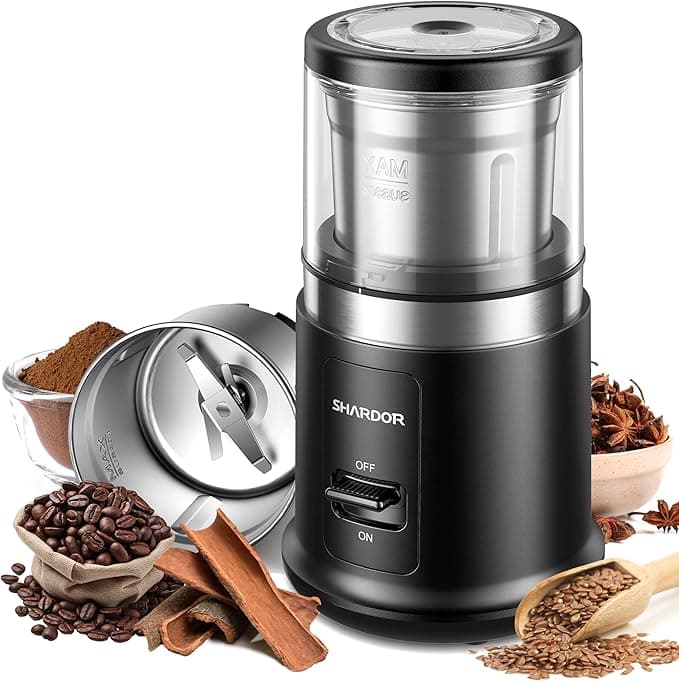
SHARDOR Electric Coffee & Seed Grinder
A compact, affordable grinder that works perfectly for freshly grinding flax, sesame, and other seeds daily. Easy to clean and doesn't take up counter space.
Store ground seeds in the fridge or freezer. The oils in seeds oxidize quickly once ground. If you want to prep a few days at a time, store the ground seeds in an airtight container in the fridge and use within a week.
Track your cycle to know your phase. If you have a regular cycle, day 1 is the first day of your period. Count forward to approximately day 14 (or whenever you ovulate — tracking with basal body temperature or LH strips gives you a more accurate picture), then switch to phase 2 seeds.
If your cycle is irregular or absent, you can follow the moon cycle as a framework — starting phase 1 seeds on the new moon and switching to phase 2 seeds on the full moon. This gives you a consistent 28-day rhythm to follow even without a regular period.
How to eat them: Sprinkle ground seeds on oatmeal, yogurt, smoothies, or salads. Mix them into energy balls. Add them to toast with nut butter. The taste is mild and easy to incorporate into meals you're already eating.
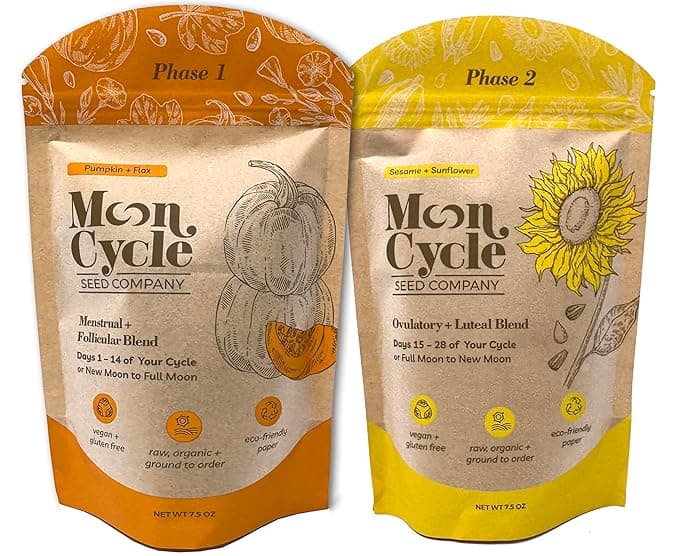
Moon Cycle Seed Company Seed Cycling Kit — Follicular & Luteal Phase Seeds
A convenient bundle of organic raw flax, pumpkin, sesame, and sunflower seeds — everything you need for both phases in one set.
What to Expect
Seed cycling is not an overnight fix. Hormonal changes happen slowly, and most women who report benefits say they noticed shifts after 2–3 full cycles of consistent practice. Some of the changes women commonly report include more regular cycles, reduced PMS symptoms (less bloating, less breast tenderness, fewer mood swings), lighter or less painful periods, and improved skin.
I noticed the biggest difference in my PMS symptoms — specifically bloating and the premenstrual irritability that used to hit me like a truck around day 22. After about three months of consistent seed cycling, those symptoms were noticeably softer. Not gone entirely, but genuinely reduced.
Is that the seeds? Placebo effect? Better overall nutrition from adding nutrient-dense foods daily? Honestly, it could be all three. And I'm fine with that. Adding two tablespoons of nutritious seeds to my daily routine has essentially no downside and provides zinc, selenium, omega-3s, fiber, and lignans regardless of whether the "cycling" mechanism works as theorized.
Who Should Try It (And Who Shouldn't)
Seed cycling is generally safe for most women, including those with irregular periods, PMS, PCOS, or early perimenopause. It's a food-based approach with minimal risk.
However, if you have a sesame or seed allergy, obviously skip the seeds you're allergic to. If you're on hormonal birth control, seed cycling likely won't have a noticeable effect since your natural hormonal fluctuations are suppressed. If you have a condition that's affected by phytoestrogen intake (certain estrogen-receptor-positive cancers), talk to your oncologist before starting.
And if you're looking for more comprehensive approaches to hormone balance, seed cycling works well alongside other practices like cycle syncing your exercise, nutrition, and lifestyle to your menstrual phase.
Frequently Asked Questions
How long until I notice results? Most women who report benefits notice changes after 2–3 full menstrual cycles of consistent practice. Hormonal shifts happen slowly — give it at least three months before evaluating.
Can I do seed cycling during perimenopause? Absolutely. If your cycles are irregular, follow the moon cycle as your framework (new moon = phase 1, full moon = phase 2). The nutritional benefits of the seeds are valuable regardless of your cycle status.
Do I have to eat the seeds at a specific time of day? No. Anytime works. Some women prefer morning (in oatmeal or a smoothie), others add them to lunch or dinner. Consistency matters more than timing.
What if I miss a day? Just pick up where you left off. Don't stress about occasional missed days — it's the overall pattern of consistent intake that matters, not perfection.
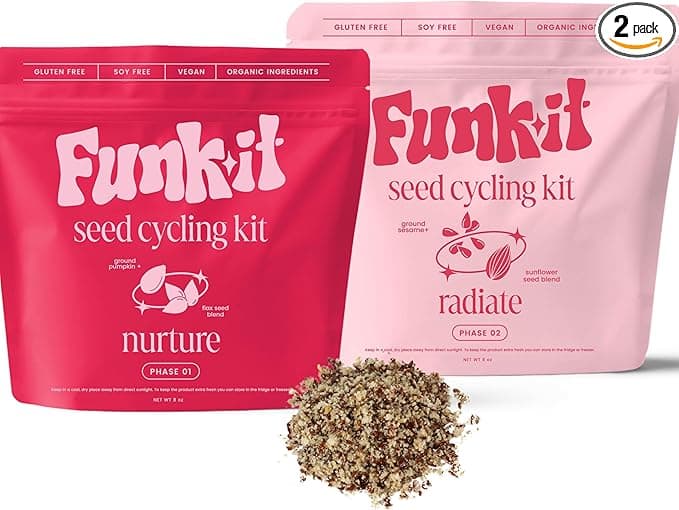
Funk It Wellness Seed Cycling Kit — Pre-Ground, Phase 1 & Phase 2
If you don't want to buy and grind seeds separately, Funk It Wellness makes a pre-portioned seed cycling kit with the exact blends for each phase. Convenient and high quality.
Easy Seed Cycling Recipes to Get You Started
If you're wondering how to actually eat two tablespoons of seeds daily without it feeling like a chore, here are a few ideas that I rotate through.
Smoothie base: This is the easiest method. Add your ground seeds to any smoothie — they blend right in and you barely taste them. A simple combo: frozen berries, banana, protein powder, almond milk, and your seeds for the day.
Overnight oats: Mix oats, milk or yogurt, chia seeds, and your seed cycling seeds the night before. Top with berries or nut butter in the morning. Ready when you are.
Seed butter on toast: Blend your phase-appropriate seeds into a quick seed butter in a food processor (add a touch of honey and salt) and spread it on sourdough or whole grain toast. You can make a batch for the week.
Energy balls: Combine dates, nut butter, oats, and your ground seeds. Roll into balls and store in the fridge. These are perfect for an afternoon snack and make the protocol feel effortless.
Salad topping: Sprinkle ground seeds over any salad. The nutty flavor actually complements vinaigrette-dressed greens really well.
The key is finding one or two methods that fit into meals you're already eating. Don't overthink it — just find a system and be consistent.
The Bottom Line
Seed cycling isn't a cure-all, and I'd never present it as a replacement for medical treatment if you have a diagnosed hormonal condition. But as a low-cost, food-based, zero-risk practice that provides genuinely beneficial nutrients? It's worth trying. Give it three months of consistent practice, track your symptoms, and see what shifts. At minimum, you'll be adding fiber, healthy fats, and micronutrients to your diet. At best, you might notice meaningful improvements in your cycle and how you feel throughout the month.